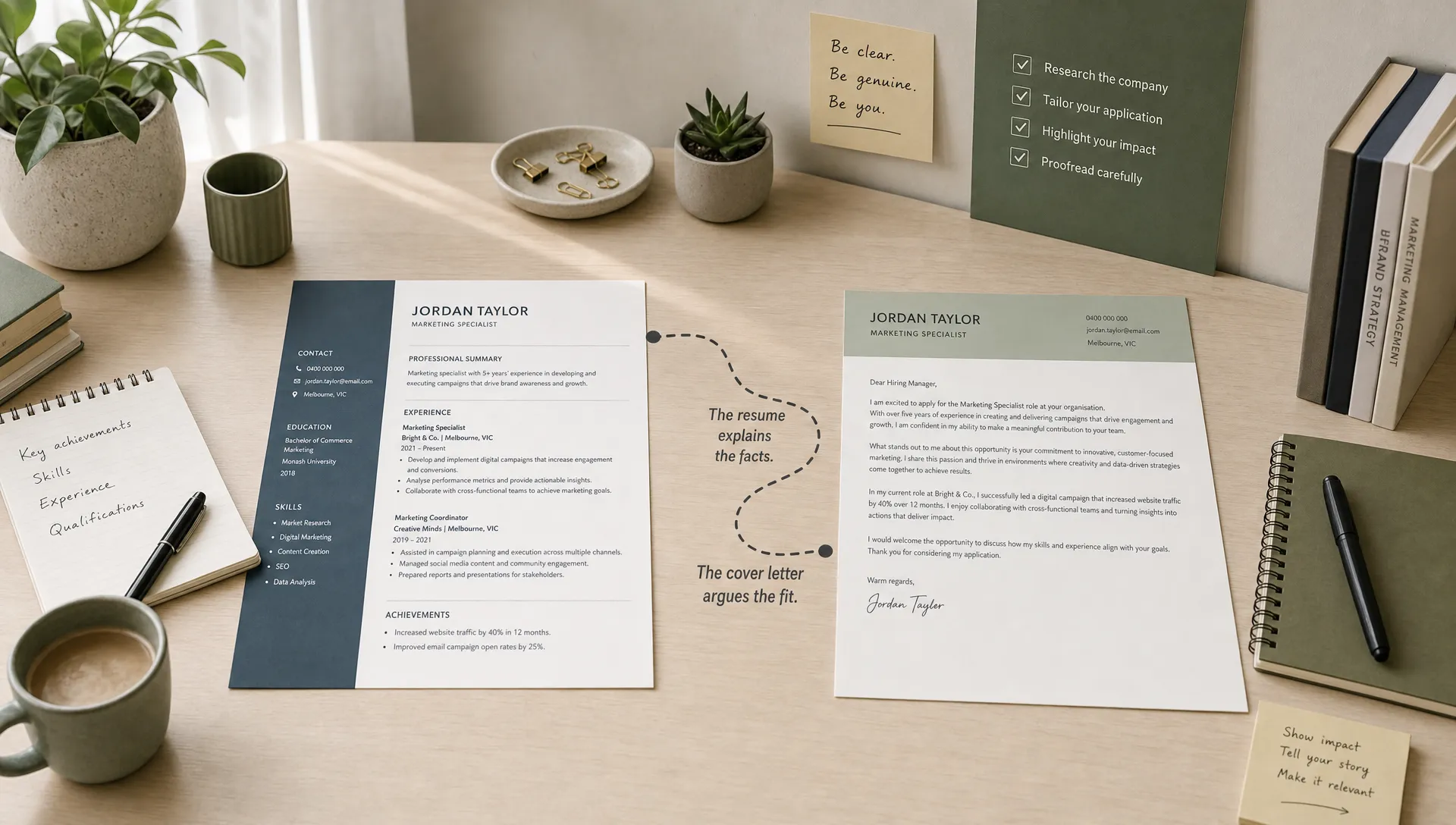
Recruiters do not need another resume that lists every task you were assigned. They need proof that you can make useful things happen. That is why resume achievements matter so much: they turn experience into evidence.
For students, graduates and career changers, this can feel intimidating. You may not have managed a team, led a major project or saved a company thousands of dollars. The good news is that achievements are not reserved for senior professionals. If you improved a process, handled pressure, solved a recurring problem, trained someone, completed a challenging project or earned trust in a role, you have material worth using.
The difference is how you frame it. A recruiter scanning your resume should be able to understand three things quickly: what you did, why it mattered and how it connects to the role they are hiring for.
What counts as a resume achievement?
A resume achievement is a result, contribution or meaningful outcome from your work, study, volunteering or personal projects. It does not have to be dramatic. It simply needs to show that you did more than occupy a position.
A responsibility describes what your role required. An achievement shows what changed because you were there.
For example, answering customer enquiries is a responsibility. Handling high volumes of customer enquiries during peak periods while maintaining positive feedback is closer to an achievement. Completing a university group project is an activity. Coordinating the research schedule, keeping the group on track and delivering a high distinction presentation is an achievement.
Good resume achievements often come from everyday situations such as:
- Improving speed, accuracy or consistency in a task
- Supporting customers, patients, clients or team members under pressure
- Training, mentoring or onboarding someone
- Organising information, schedules, stock or documentation
- Helping a project finish on time
- Reducing errors, delays, complaints or confusion
- Being trusted with extra duties, cash handling, opening procedures or key tasks
- Contributing to sales, engagement, retention or service quality
If it helped the team, customer, business, class or community, it may belong on your resume.
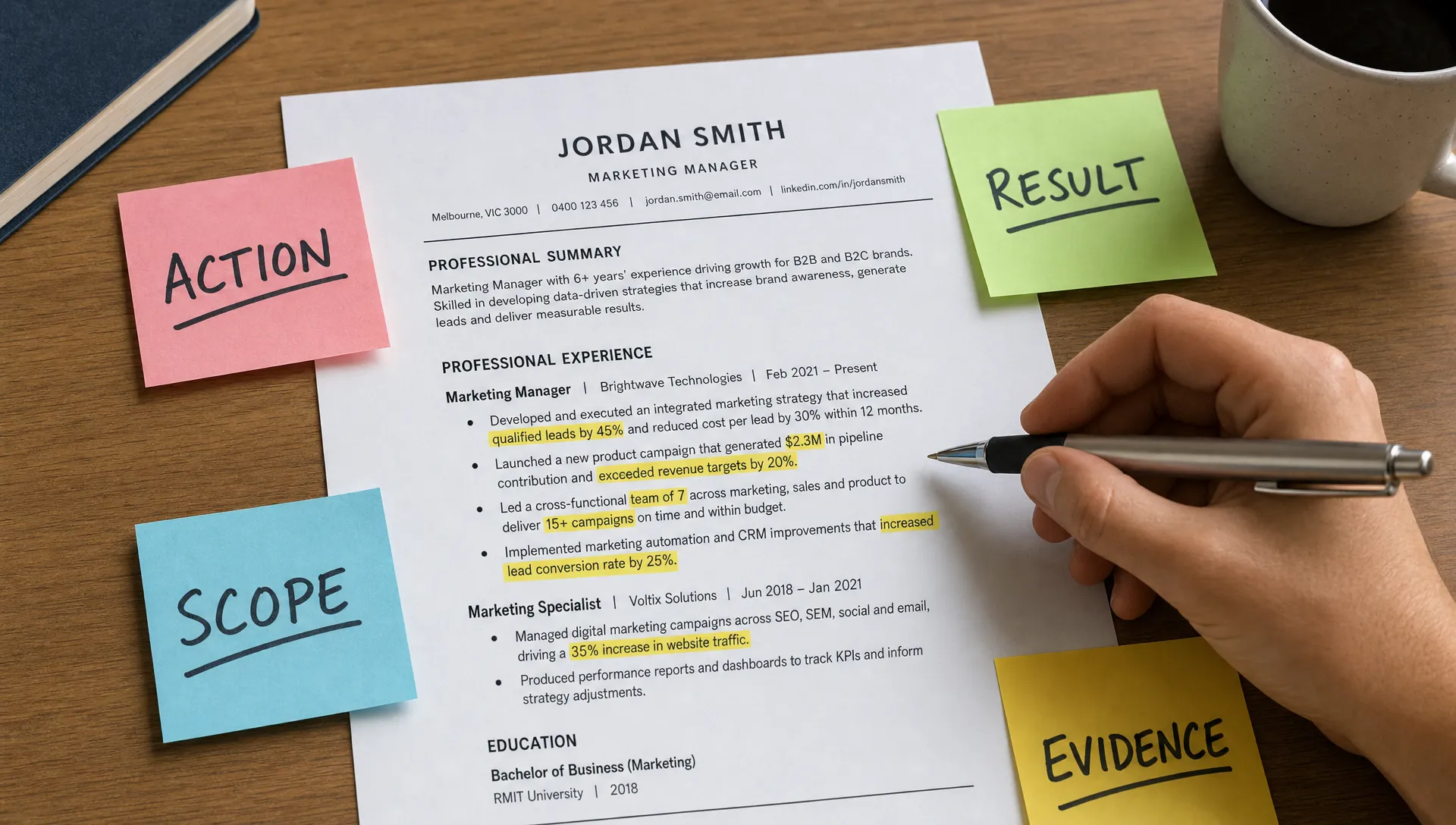
The strongest achievement bullets usually combine four ingredients: action, context, evidence and relevance.
A simple structure is:
Action + scope + result + relevance.
That might look like this:
- Coordinated weekly stock checks for a retail team, reducing missing item issues and improving handover accuracy during busy trading periods.
- Supported up to 80 customers per shift in a fast-paced hospitality environment, balancing service quality, order accuracy and complaint resolution.
- Built a university research presentation from survey data and competitor analysis, helping the group achieve a high distinction result.
Notice that none of these examples says the person is hardworking, reliable or detail-oriented. The achievement proves those qualities through context.
You do not need to force every bullet into the same structure. Some achievements are stronger when they lead with a number. Others work better when they explain the problem first. What matters is that the reader can see the contribution clearly.
Weak resume bullets tend to stop at duties:
- Responsible for customer service
- Helped with admin tasks
- Worked on marketing campaigns
- Used Microsoft Excel
Stronger achievement bullets add proof:
- Resolved customer enquiries across phone, email and in-person channels, helping reduce repeat follow-ups during peak periods.
- Updated and organised client records in Excel, improving accuracy for weekly reporting and handover between staff.
- Assisted with campaign scheduling and content reporting, giving the team clearer visibility on engagement trends.
If you are also reviewing your skills section, make sure your skills and achievements support each other. Skills tell recruiters what you can do. Achievements show where you have already done it.
Start with the job ad, not your memory
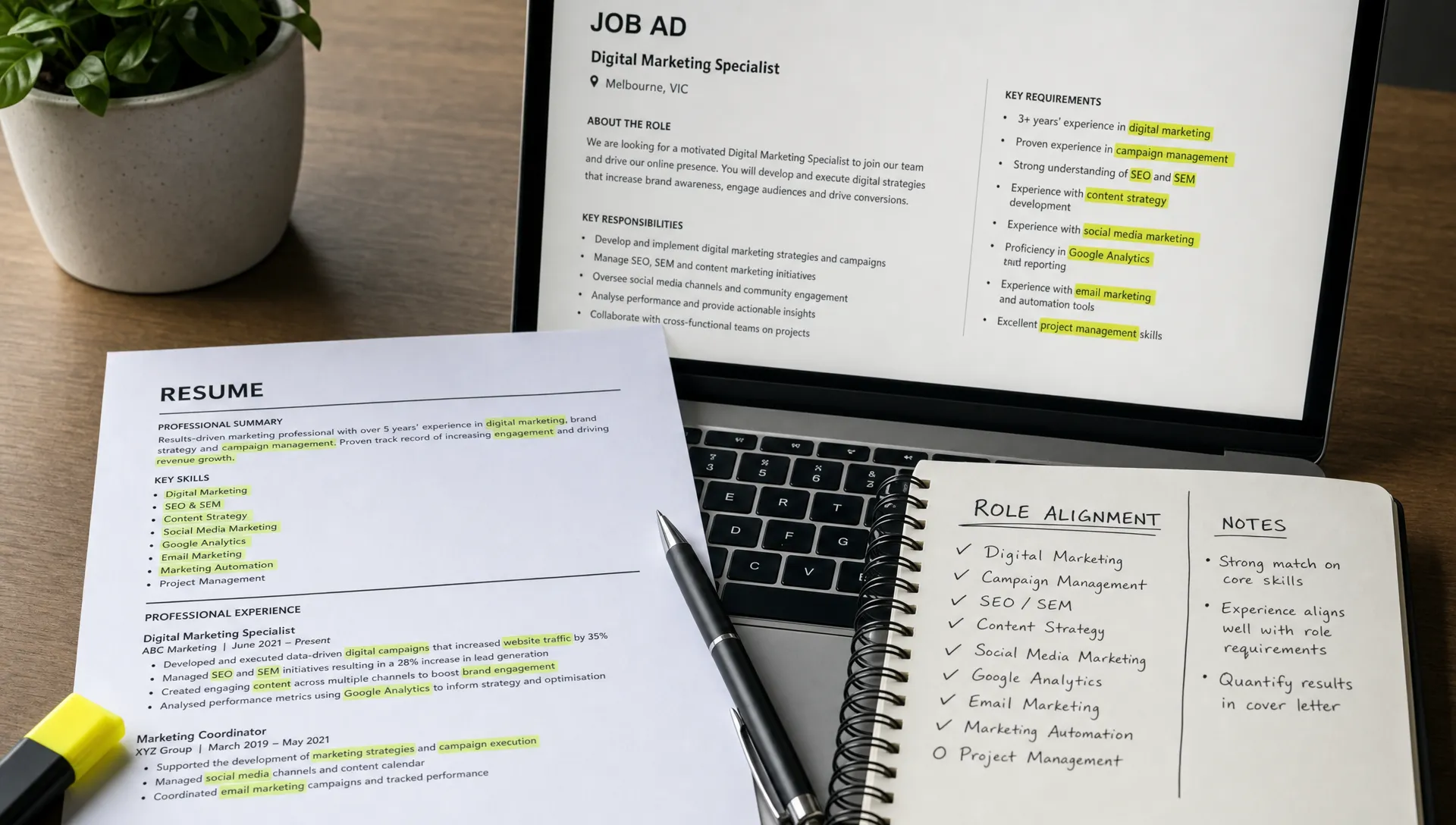
Many job seekers make the mistake of writing achievements from memory, then hoping they fit the role. A stronger approach is to read the job ad first and identify what evidence the employer is looking for.
If a job ad mentions stakeholder communication, your best achievement may involve customers, suppliers, teammates or group project coordination. If it mentions data entry, accuracy or reporting, your strongest evidence may come from admin tasks, spreadsheets or quality checks. If it mentions initiative, look for a time you fixed a problem without waiting to be asked.
This is where tailoring matters. You do not need a completely new resume for every application, but you should choose the achievements that best match the role. If you need a broader process for aligning your resume to a specific job, Versadox has a practical guide on how to match your resume to the job you want.
The key is relevance. A technically impressive achievement can still underperform if it does not answer the recruiter’s current question. A smaller but more relevant achievement is often more persuasive.
Resume achievement examples by experience type
Different backgrounds produce different kinds of achievements. The goal is not to copy examples exactly, but to use them as prompts for your own evidence. Only include details that are true for you.
Retail and customer service
Retail roles can produce strong achievements because they involve communication, problem-solving, sales, teamwork and pressure. Avoid writing only that you served customers or operated a register.
Stronger examples include:
- Assisted 50+ customers per shift across product enquiries, returns and payments while maintaining a calm service experience during peak trading hours.
- Trained two new team members on register procedures, store layout and customer handover expectations.
- Helped maintain accurate shelf presentation and stock rotation, reducing misplaced items during weekend rush periods.
- Handled customer complaints by clarifying the issue, offering suitable options and escalating when required.
Hospitality
Hospitality experience is often underestimated, especially by graduates. It can show stamina, prioritisation, conflict management and speed.
Achievement-focused bullets might include:
- Managed multiple tables during high-volume dinner service while coordinating orders with kitchen and bar staff.
- Improved shift handovers by updating booking notes and customer requests before service changeover.
- Supported training for new casual staff on menu knowledge, point-of-sale processes and service standards.
- Maintained order accuracy during busy periods by confirming dietary requirements and special requests before submission.
Administration and office support
Admin achievements work best when they highlight accuracy, organisation, confidentiality or process improvement.
Examples include:
- Reorganised shared digital files to make client documents easier to locate for weekly reporting.
- Processed incoming forms and records with careful attention to completeness, reducing follow-up requests from the team.
- Coordinated meeting bookings, agendas and notes for a small office team, improving visibility on actions and deadlines.
- Updated spreadsheet trackers to support cleaner reporting across customer enquiries, invoices or project tasks.
Study, placements and university projects
Students and recent graduates can use academic projects when they show skills relevant to the role. The mistake is writing the subject name only. Recruiters need to understand the work behind the result.
Useful examples include:
- Conducted competitor research and customer analysis for a university business project, contributing to a final recommendation presented to a panel.
- Built a prototype, report or campaign plan under a fixed deadline, balancing research, design and peer feedback.
- Coordinated a group assignment timeline by assigning tasks, tracking progress and consolidating final edits before submission.
- Completed placement documentation accurately while applying professional communication standards in a real workplace setting.
Career change and transferable experience
Career changers should focus on achievements that translate across industries. You do not need to hide previous experience. You need to explain its value in the language of the new role.
For example, a retail supervisor moving into office administration might highlight scheduling, reporting, team coordination and customer communication. A hospitality worker moving into sales might highlight relationship building, objection handling and service under pressure.
If your past job title does not match your target role, the achievement bullet has to do more work. It should translate the contribution so the recruiter does not have to guess.
Marketing, content and digital roles
Marketing achievements should connect activity to outcomes. Posting content, writing emails or making assets is useful, but recruiters pay closer attention when you show the purpose and result.
For ecommerce, content or growth roles, platforms such as AI-powered marketing workflows reflect the move toward faster campaign ideation, creative production, publishing and optimisation. If you have worked with campaign tools, automation or analytics, your resume should still focus on the commercial or communication outcome rather than the tool name alone.
Achievement examples could include:
- Assisted with planning and scheduling weekly social content, using engagement data to recommend changes to captions, timing or creative formats.
- Drafted email campaign copy for a student club, event or small business, contributing to stronger attendance, enquiries or repeat engagement.
- Analysed campaign results and summarised key learnings for the team, helping shape future content decisions.
How to find achievements when your jobs felt ordinary
If you feel like you have no achievements, start by looking for moments when someone trusted you, relied on you or benefited from your work. Most achievements are hidden inside routine tasks.
Ask yourself:
- What tasks did others come to me for because I was consistent or accurate?
- What became faster, cleaner or easier after I worked on it?
- Did I handle a busy period, difficult customer or urgent deadline well?
- Did I train, guide or support a teammate?
- Did I organise information, stock, files, bookings or schedules?
- Did I receive positive feedback from a manager, customer, teacher or peer?
- Did I help prevent a problem, mistake or delay?
You can also review old rosters, emails, assignment briefs, performance notes, project documents and feedback messages. These often contain details you have forgotten, such as volumes, deadlines, responsibilities or outcomes.
Numbers that make resume achievements stronger
Numbers help recruiters understand scale. They do not need to be perfect, but they should be honest. If you are estimating, use careful language such as approximately, up to or average.
Useful numbers include:
- Volume, such as customers served, calls handled, orders processed or reports completed
- Time, such as deadlines met, hours saved or turnaround improved
- Frequency, such as daily, weekly or monthly responsibilities
- Quality, such as fewer errors, fewer complaints or improved accuracy
- Money, such as revenue supported, costs reduced or budgets managed
- People, such as team members trained, stakeholders supported or attendees coordinated
- Results, such as grades, satisfaction feedback, completion rates or engagement changes
Not every achievement needs a number. Some proof is qualitative. Being selected to open or close a store, trusted with confidential records, asked to train new staff or chosen to represent a group can all show credibility.
The point is to move beyond vague claims. A bullet that says you worked in a fast-paced environment is common. A bullet that says you managed 70+ orders during peak service while maintaining order accuracy is far more useful.
Before and after examples that recruiters notice
If your resume currently reads like a duty list, start by rewriting one bullet at a time. The aim is not to make the experience sound bigger than it was. The aim is to make the value visible.
Retail example:
- Duty version: Served customers and worked on the register.
- Achievement version: Served customers across register, returns and product enquiries, maintaining friendly service during high-volume weekend shifts.
Admin example:
- Duty version: Entered data and helped with office tasks.
- Achievement version: Entered and checked client information in shared spreadsheets, improving record accuracy for weekly team reporting.
Student project example:
- Duty version: Completed a group marketing assignment.
- Achievement version: Led competitor research and summarised survey findings for a group marketing plan that received a high distinction result.
Career changer example:
- Duty version: Worked as a barista.
- Achievement version: Managed customer orders, payments and service flow during peak morning periods, building strong prioritisation and customer communication skills relevant to client-facing roles.
For a deeper breakdown of turning plain duties into stronger evidence, read Versadox’s guide on how to improve a resume work experience description.
How to write achievements without sounding arrogant
Many job seekers underplay their achievements because they do not want to sound boastful. Others go too far and make claims that feel inflated. The best resume writing sits in the middle: confident, specific and honest.
Use accurate ownership language. If you led the work, say led. If you supported it, say supported. If you contributed to a team outcome, say contributed to. Recruiters do not expect every candidate to be the sole reason something improved, especially in entry-level roles.
Good ownership language includes:
- Led, when you had clear responsibility for the result
- Coordinated, when you organised people, tasks or moving parts
- Supported, when you helped deliver an outcome
- Contributed to, when the result belonged to a wider team
- Improved, when you can explain what changed
- Assisted with, when your role was meaningful but not the main driver
This matters because your resume needs to survive the interview. If a recruiter asks how you achieved a result, you should be able to explain your role clearly without backtracking.
Where to put achievements on your resume
Achievements belong throughout your resume, not only in one section.
Your professional summary can include one strong line that signals your most relevant value. For example, a graduate applying for analyst roles might mention research, reporting and stakeholder communication. A career changer applying for administration roles might mention scheduling, customer support and accurate record management.
Your work experience section should carry most of the detail. Aim for bullets that show contribution, not a copy of your job description. For recent or relevant roles, three to five strong bullets are often enough. For older or less relevant roles, one or two targeted achievements may be more effective.
You can also use achievements in:
- Education, especially if projects, placements or research match the job
- Volunteering, especially if you organised people, events, fundraising or communications
- Projects, especially for students, graduates, designers, developers, analysts and marketers
- Cover letters, where one achievement can become a short story that proves fit
The same achievement can appear in different ways across your application. On your resume, it may be a concise bullet. In your cover letter, it may become a two-sentence example. In an interview, it may become a STAR response with more context.
Common mistakes that weaken resume achievements
The first mistake is using achievements that are too vague. Phrases like helped improve team performance or contributed to business success sound positive, but they do not tell the recruiter what happened. Add the task, setting or result.
The second mistake is adding numbers without meaning. Increased efficiency by 20 percent sounds impressive only if you can explain what efficiency means and how it was measured. If you cannot support the number, use a clearer qualitative result instead.
The third mistake is writing achievements that do not match the role. A detailed sales achievement may not help much if you are applying for a research assistant role, unless you connect it to communication, data tracking or stakeholder follow-up.
The fourth mistake is hiding the best evidence too low on the page. Recruiters scan quickly. Put your most relevant achievements near the top of each role, not after generic duties.
The fifth mistake is relying on personality words. Reliable, motivated, passionate and hardworking are not useless, but they need evidence. If you were reliable, show consistent attendance, trusted responsibilities or repeat manager confidence. If you were motivated, show initiative, learning or follow-through.
Frequently Asked Questions
How many resume achievements should I include? For each recent or relevant role, aim for three to five achievement-focused bullets. For less relevant roles, one or two strong bullets may be enough. Quality matters more than volume.
What if I do not have numbers for my achievements? Use context instead. You can mention busy periods, deadlines, trusted responsibilities, positive feedback, process improvements, team size or project complexity. Honest qualitative proof is better than invented metrics.
Are resume achievements more important than skills? They work together. Skills help your resume match the role, but achievements prove you have applied those skills in real situations. A strong resume usually includes both.
Can students use university projects as resume achievements? Yes. Student projects can be valuable when they show research, teamwork, analysis, communication, technical skills or problem-solving. Focus on what you did and what the project produced.
Should I change my achievements for every job application? You do not need to rewrite everything, but you should reorder, refine or select achievements based on the job ad. The most relevant evidence should be easy for the recruiter to find.
Build a resume with stronger evidence
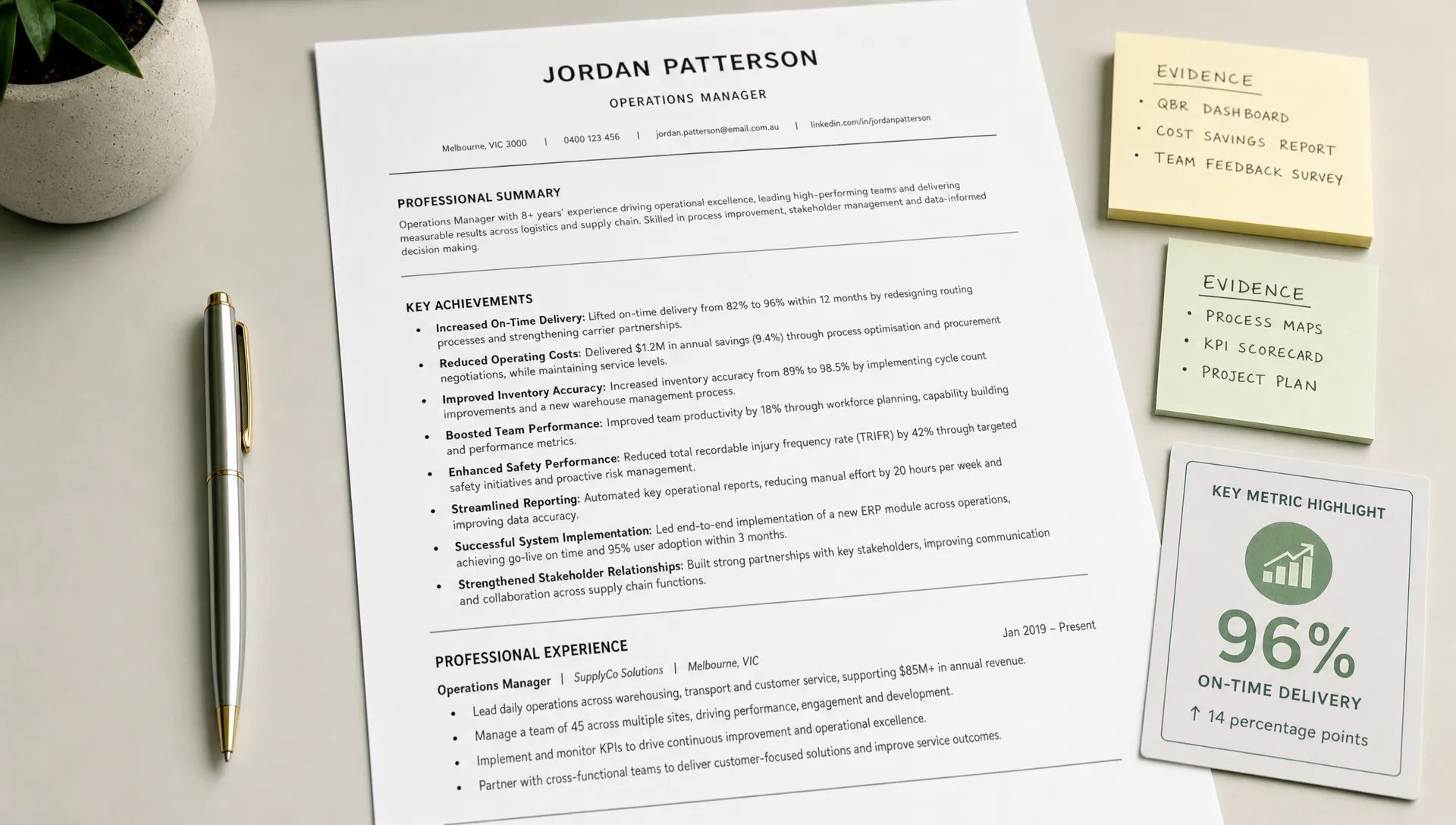
Strong resume achievements help recruiters see your value faster. They turn ordinary experience into proof of communication, initiative, accuracy, leadership, problem-solving and role readiness.
If you are not sure which achievements match your target role, Versadox can help you compare your resume and cover letter against real jobs, identify gaps, review your readiness and make guided improvements before you apply. That way, you are not guessing what to highlight. You are building an application around clearer evidence.





.svg)