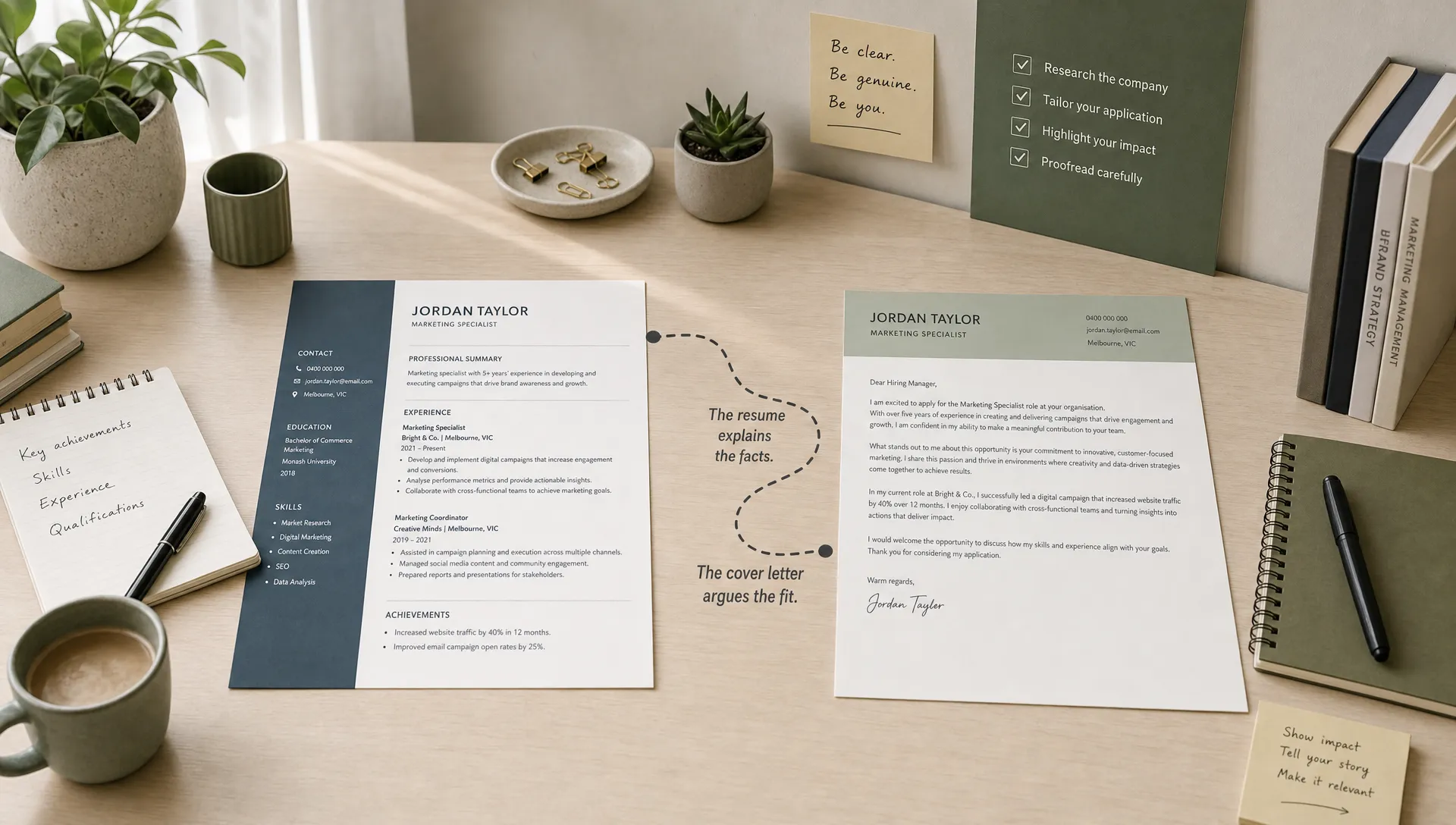
A job application is the set of information you send to an employer to be considered for a role. It may look simple from the outside: upload a resume, answer a few questions, press submit. In reality, it is your first structured argument for why you are suitable for the job.
For students, graduates and career changers, understanding job applications matters because the strongest candidate on paper is not always the person with the most experience. Often, it is the person who explains their fit most clearly.
A good application helps an employer quickly answer three questions:
- Can this person do the work?
- Do they understand the role?
- Should we spend interview time learning more about them?
That is why job applications are not just admin. They are a career positioning tool.
So, what are job applications?
Job applications are formal submissions used by employers to assess candidates for open positions. They usually combine documents, written answers and profile information that show your skills, experience, education, motivation and availability.
Depending on the employer, a job application might be submitted through a company careers page, a job board, LinkedIn, a recruitment agency or direct email. Some applications take five minutes. Others, especially graduate programs, government roles or competitive internships, may take hours because they ask for detailed selection criteria, behavioural responses or supporting documents.
The purpose is the same: to help the employer decide whether you are worth progressing to the next stage.
A job application is not the same as a resume, although the resume is usually the main document inside it. If you want to understand that document in more detail, Versadox has a separate guide explaining what a job resume is and why it carries so much weight in hiring.
What a job application usually includes
Not every application asks for the same information, but most include a combination of the following elements:
- Resume or CV: A summary of your education, work history, skills, achievements and relevant experience.
- Cover letter: A short document explaining why you are interested in the role and how your background connects to the employer’s needs.
- Application form: Employer-specific fields such as contact details, work rights, availability, salary expectations and screening questions.
- Selection criteria or written responses: Short answers that show how you meet specific requirements, common in public sector, graduate and university roles.
- Portfolio or work samples: Evidence of your work, often used in design, writing, marketing, software, research and creative roles.
- LinkedIn profile or online presence: A supporting view of your professional background, especially for internships, corporate roles and networking-led hiring.
- References: People who can confirm your work ethic, skills or character, usually requested later in the process.
Your application may also include assessments, recorded video responses or work simulation tasks. These are not always part of the first submission, but they are increasingly common in structured hiring processes.
Why job applications matter
Job applications matter because they decide whether you get access to the next conversation. You may be capable of doing the role, but if your application does not make that clear, the employer may never find out.
They create your first impression
Before a recruiter hears your voice or meets you in an interview, they see your application. Formatting, spelling, structure and relevance all shape how professional and prepared you appear.
This does not mean your application needs to sound stiff or over-polished. It means it should be clear, targeted and easy to assess. A rushed application can make a strong candidate look uncertain. A thoughtful application can help a developing candidate look serious and coachable.
They show whether you understand the role
Employers are not only checking whether you have skills. They are checking whether you understand the problem they are hiring someone to solve.
For example, a retail assistant application should not only say you are friendly. It should show customer service, reliability, communication and comfort working in a fast-paced environment. A junior data analyst application should not only list Excel or Python. It should connect those tools to reporting, problem-solving and decision support.
The closer your evidence matches the actual role, the easier it is for an employer to see your fit.
They help you compete beyond experience
Early-career candidates often worry that they do not have enough experience. Career changers worry that their experience is not directly relevant. A strong application helps bridge that gap by translating your background into the employer’s language.
Casual work, volunteer roles, university projects, internships, personal projects and transferable skills can all support an application when they are framed well. The key is to avoid listing everything you have ever done and instead choose evidence that makes sense for the role.
They make interviews easier
A strong application does not just get you shortlisted. It also shapes the interview conversation.
If your resume and cover letter already highlight relevant examples, the interviewer has a clearer path into your strengths. You are less likely to be asked broad questions that catch you off guard and more likely to discuss the experience you prepared to explain.
How employers assess job applications
Most employers use a layered process. The exact process varies, but applications are commonly reviewed through a mix of technology and human judgement.
First, an applicant tracking system may collect, organise and filter applications. These systems help employers manage large volumes of candidates. They may parse resumes, store answers and help recruiters search for relevant terms.
Then, a recruiter or hiring team member reviews the application for fit. They usually look for the basics first: work rights, location, availability, required qualifications and obvious match with the role. After that, they look more closely at experience, achievements, communication and motivation.
Finally, the hiring manager may review shortlisted applications to decide who should be interviewed. At that point, specific evidence becomes more important than generic statements.
AI is also changing how both sides approach hiring. Candidates can use AI tools to improve clarity and tailoring, while employers use technology to manage workflows and screen information more efficiently. On the business side, teams that need tailored automation or AI implementation often work with specialists such as Impulse Lab’s custom web and AI platform team to build practical systems around their processes. For job seekers, the lesson is simple: your application should be readable by technology, but persuasive to a human.

Common types of job applications
The format of your application changes how you should approach it. A quick submission is not always a low-effort opportunity and a long application is not always a better one.
Common formats include:
- Online job board applications: These are common on platforms like SEEK, Indeed and LinkedIn. They usually require a resume, basic details and sometimes a cover letter.
- Company careers page applications: These often ask more structured questions because the employer manages the process directly.
- LinkedIn Easy Apply or Quick Apply: These can be useful for well-matched roles, but they can also encourage generic applications if you apply without tailoring.
- Graduate program applications: These may include resumes, cover letters, academic results, psychometric testing, video interviews and assessment centres.
- Government or public sector applications: These often require selection criteria and detailed examples aligned to capability frameworks.
- Recruiter-led applications: These may involve sending your resume to a recruiter who then represents you to employers.
- Referral applications: These happen when someone in your network introduces you or recommends you for a role.
Each format rewards clarity. Even when the process feels casual, employers still need to understand why you are a good match.
What makes a strong job application?
A strong job application is not the longest one. It is the one that makes the employer’s decision easier.
It is tailored to the role
Tailoring does not mean rewriting everything from scratch. It means adjusting your resume, cover letter and answers so the most relevant information is easy to find.
If the role asks for stakeholder communication, your application should show communication in action. If the role asks for data entry accuracy, show examples of detail, systems or process work. If the role asks for teamwork, show the setting, your contribution and the outcome.
Generic applications often fail because they make employers do the translation themselves.
It uses evidence, not empty claims
Many candidates write that they are hardworking, motivated, passionate or a fast learner. Those words are not wrong, but they are weak without proof.
Evidence sounds more like this:
- Managed customer enquiries during peak weekend shifts while maintaining accurate transaction records.
- Completed a university research project using survey data, Excel analysis and a final presentation to a class panel.
- Supported a community event by coordinating volunteers, tracking registrations and solving on-the-day scheduling issues.
The best evidence is specific enough to feel real and relevant enough to support the role.
It is easy to scan
Recruiters often review many applications in a short period. Your application should help them find the key information quickly.
Use clear headings, consistent formatting and concise bullet points. Avoid dense paragraphs in your resume. Do not hide important skills at the bottom of the page. Make sure dates, job titles and education details are easy to understand.
Good design is not about decoration. It is about reducing friction.
It is consistent across documents
Your resume, cover letter, LinkedIn profile and application answers should tell the same story. If your resume says you are targeting marketing roles but your cover letter sounds like it was written for administration, the employer may question your focus.
Consistency does not mean repetition. Your resume provides evidence, while your cover letter explains relevance and motivation. For a deeper breakdown, read Versadox’s guide to what a cover letter is and when you need one.
Common mistakes that weaken job applications
Most weak applications do not fail because the candidate has nothing to offer. They fail because the value is unclear.
Watch out for these common mistakes:
- Sending the same resume everywhere: A generic resume may miss the role’s most important keywords, examples and priorities.
- Listing duties instead of achievements: Duties explain what the job involved. Achievements show how you contributed.
- Ignoring the job ad: If the employer asks for specific skills or criteria, your application should respond to them directly.
- Overusing AI without editing: AI can help you draft, but the final application should sound like you and contain accurate evidence.
- Writing a vague cover letter: A cover letter that could be sent to any employer usually does not help much.
- Applying without checking fit: More applications do not always mean better results if the roles are poorly matched.
- Using messy formatting: Hard-to-read layouts, inconsistent fonts and unusual file formats can distract from your strengths.
In 2026, professionalism is less about sounding formal and more about being targeted, evidence-based and easy to assess. Versadox covers this in more detail in its guide to what makes a professional job application.
How to build better job applications
Improving your applications starts before you upload a resume. The goal is to understand the role, choose the right evidence and remove anything that creates confusion.
Read the job ad like a checklist
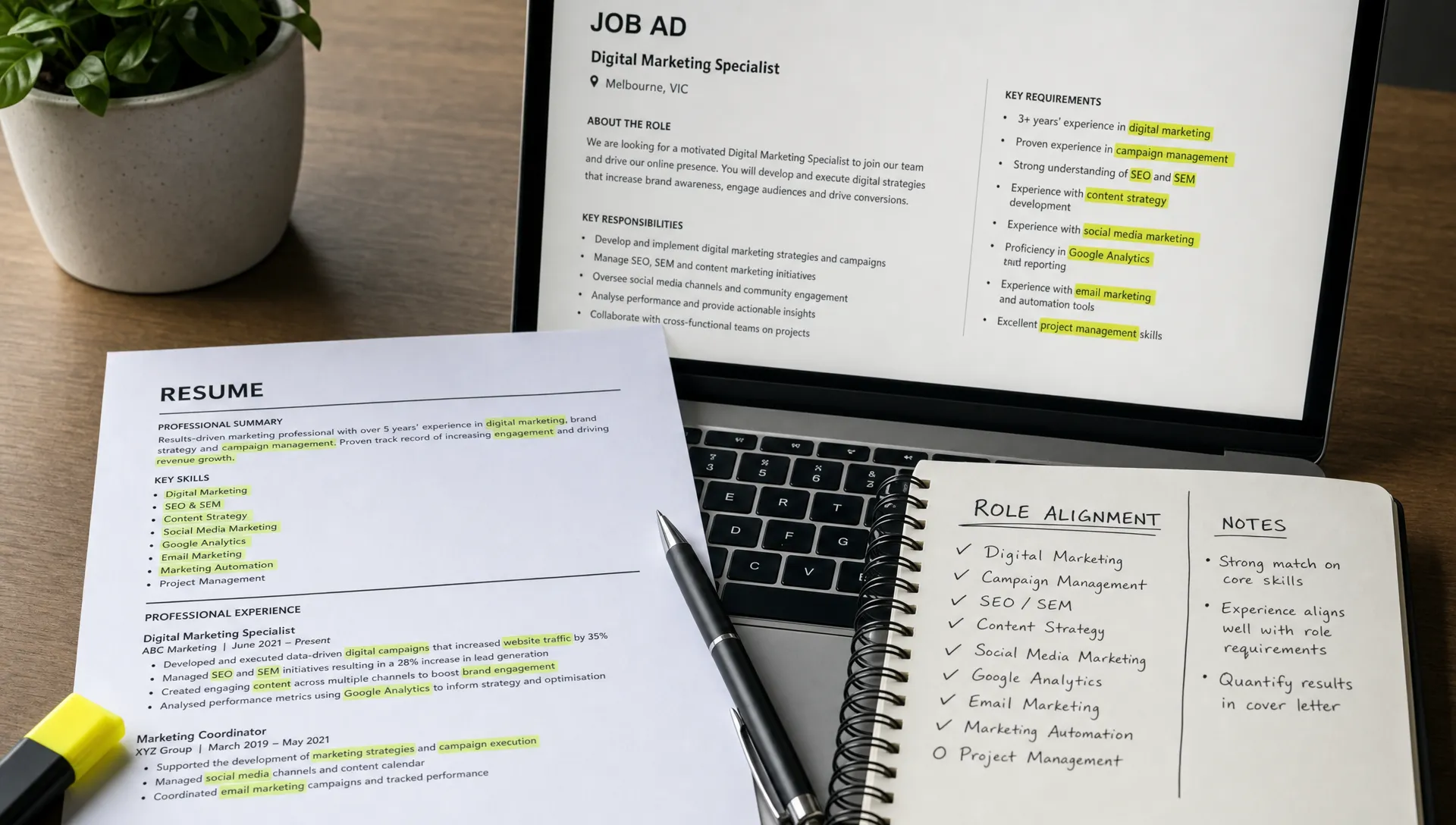
Before applying, highlight the skills, qualifications, tools, tasks and personal qualities mentioned in the ad. Look for repeated themes. If communication appears several times, it is probably central to the role. If the ad mentions reporting, systems and accuracy, your application should show evidence in those areas.
Do not copy the job ad word for word. Use it to understand what the employer values.
Build an evidence bank
An evidence bank is a collection of examples you can reuse and adapt. It might include projects, part-time jobs, volunteer experience, coursework, internships, leadership roles or personal projects.
For each example, capture the situation, what you did, the skills involved and the result. This makes it easier to tailor applications without starting from zero every time.
Match your resume to the role
Your resume should make your strongest match visible quickly. That may mean changing your profile summary, reordering bullet points or adding relevant coursework, projects or tools.
For a student applying to an entry-level finance role, a university budgeting project may deserve more space. For a career changer moving into HR, training, mentoring or rostering experience may be more relevant than an old job title suggests.
Use the cover letter strategically
A cover letter is useful when you need to explain motivation, context or transferable experience. It can help if you are changing careers, applying for a competitive graduate role, returning to work or connecting unusual experience to a new role.
Keep it focused. Explain why the role interests you, why your background fits and what evidence supports that fit.
Check your gaps before applying
A gap is not always a deal-breaker. Sometimes it is simply an area you need to explain, improve or balance with other strengths.
For example, if a role asks for a tool you have only used in class, say that clearly and support it with a project. If a role asks for customer service and you have volunteer experience, frame the interaction, responsibility and outcome.
This is where platforms like Versadox can help. Versadox helps job seekers compare their resume and application materials against real roles, identify gaps, assess readiness and make guided improvements before submitting.
Are more job applications always better?
Not necessarily. Volume can help, but only when the applications are still targeted.
If you send 80 rushed applications that barely match the roles, you may get fewer interviews than someone who sends 25 stronger applications to well-chosen roles. The better question is not only “how many applications should I send?” It is “how many suitable roles can I apply for well?”
A healthy job search usually includes a mix of activity:
- Applying to roles that genuinely match your skills and goals.
- Tailoring your resume and cover letter for the strongest opportunities.
- Building your network through conversations, events and LinkedIn.
- Improving your profile based on patterns in rejections or silence.
- Tracking what you applied for, when you applied and what response you received.
This approach gives you more useful feedback than applying randomly and hoping something works.
Frequently Asked Questions
What are job applications in simple terms? Job applications are the documents and information you send to an employer when you want to be considered for a role. They usually include a resume, application form and sometimes a cover letter, selection criteria or portfolio.
Is a resume the same as a job application? No. A resume is one part of a job application. The full application may also include forms, cover letters, screening questions, work samples, references and assessments.
Why do employers ask for job applications? Employers use job applications to compare candidates, check basic requirements and decide who should move to interviews. A clear application helps them assess your skills, experience and fit for the role.
Do I need a cover letter for every job application? Not always. If the employer asks for one, include it. A cover letter is also useful when you need to explain career change, motivation, transferable skills or why you are especially suited to a role.
Can AI help with job applications? Yes, AI can help you clarify wording, tailor documents and identify gaps. You still need to check accuracy, add real evidence and make sure the final application sounds like you.
Apply with more clarity before you submit
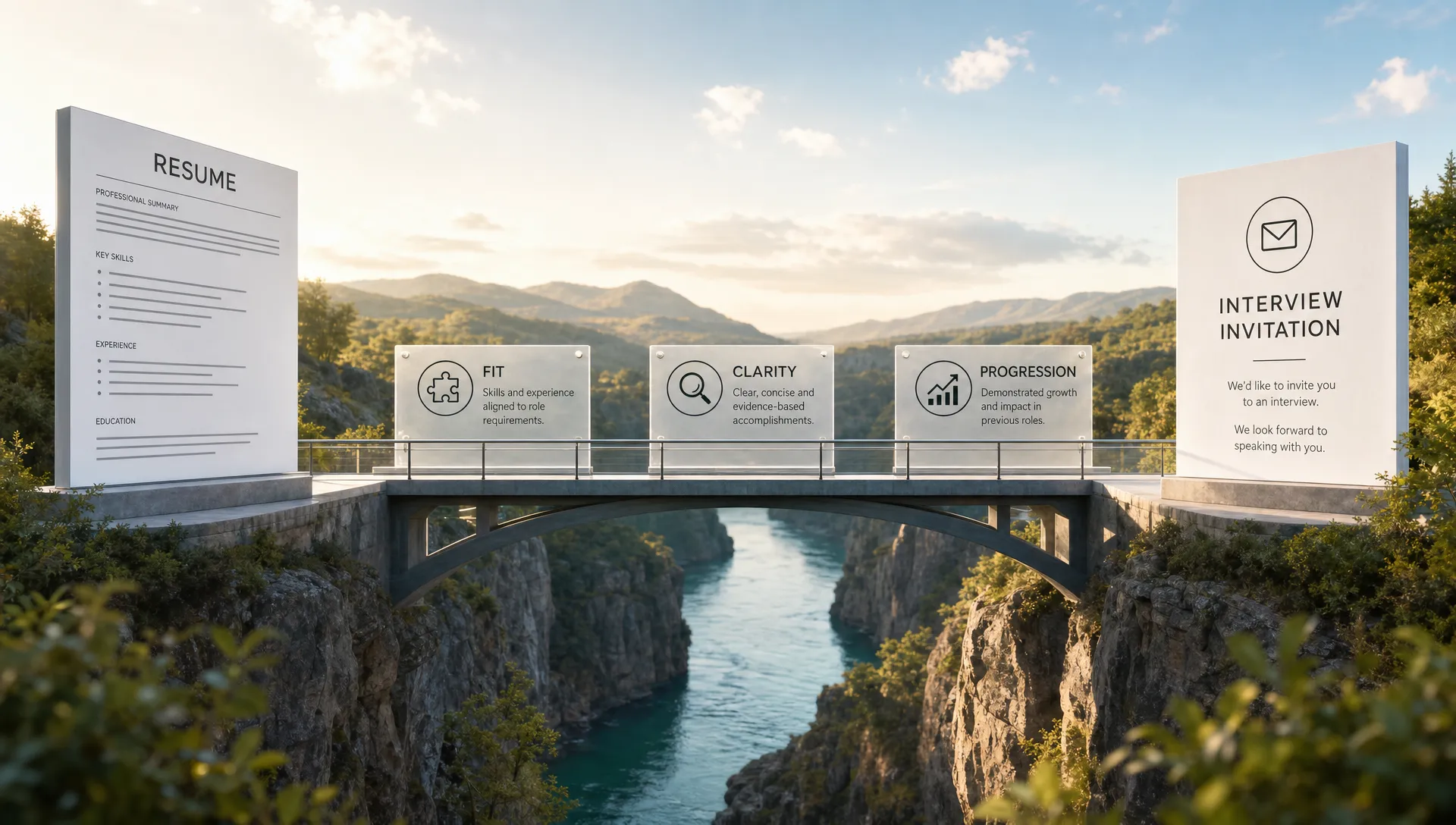
Job applications matter because they shape how employers see your potential. A strong application does not pretend you are perfect. It presents your experience clearly, connects it to the role and helps the employer understand why you are worth interviewing.
If you are unsure whether your resume and cover letter match a role, Versadox can help you assess your readiness before you apply. Use it to compare your application against real roles, identify gaps, improve your positioning and export stronger application documents with more confidence.





.svg)