The short answer: yes, cover letters are still needed in 2026, but not for every application.
A cover letter is no longer a formality you attach because every career adviser once told you to. Hiring teams are flooded with AI-assisted applications, quick apply submissions and polished resumes that often look similar. A useful cover letter now has a clearer job: it explains fit, judgement and motivation in a way your resume cannot.
For students, graduates and career changers, that can matter a lot. Your resume may show potential, but it may not explain why your study, casual work, placement, volunteer experience or previous industry experience makes sense for this role. A cover letter can connect those dots.
The catch is that a weak cover letter can work against you. If it repeats your resume, uses generic phrases or sounds like it was copied from a template, it adds noise. In 2026, the real question is not only “are cover letters needed?” It is “will this cover letter make my application clearer, stronger and more credible?”
Why cover letters still matter in 2026
Recruitment has become faster, more digital and more competitive. Many employers use applicant tracking systems, online forms and structured screening processes before a human reads the full application. That has made some job seekers assume cover letters are obsolete.
They are not obsolete. They are just judged differently.
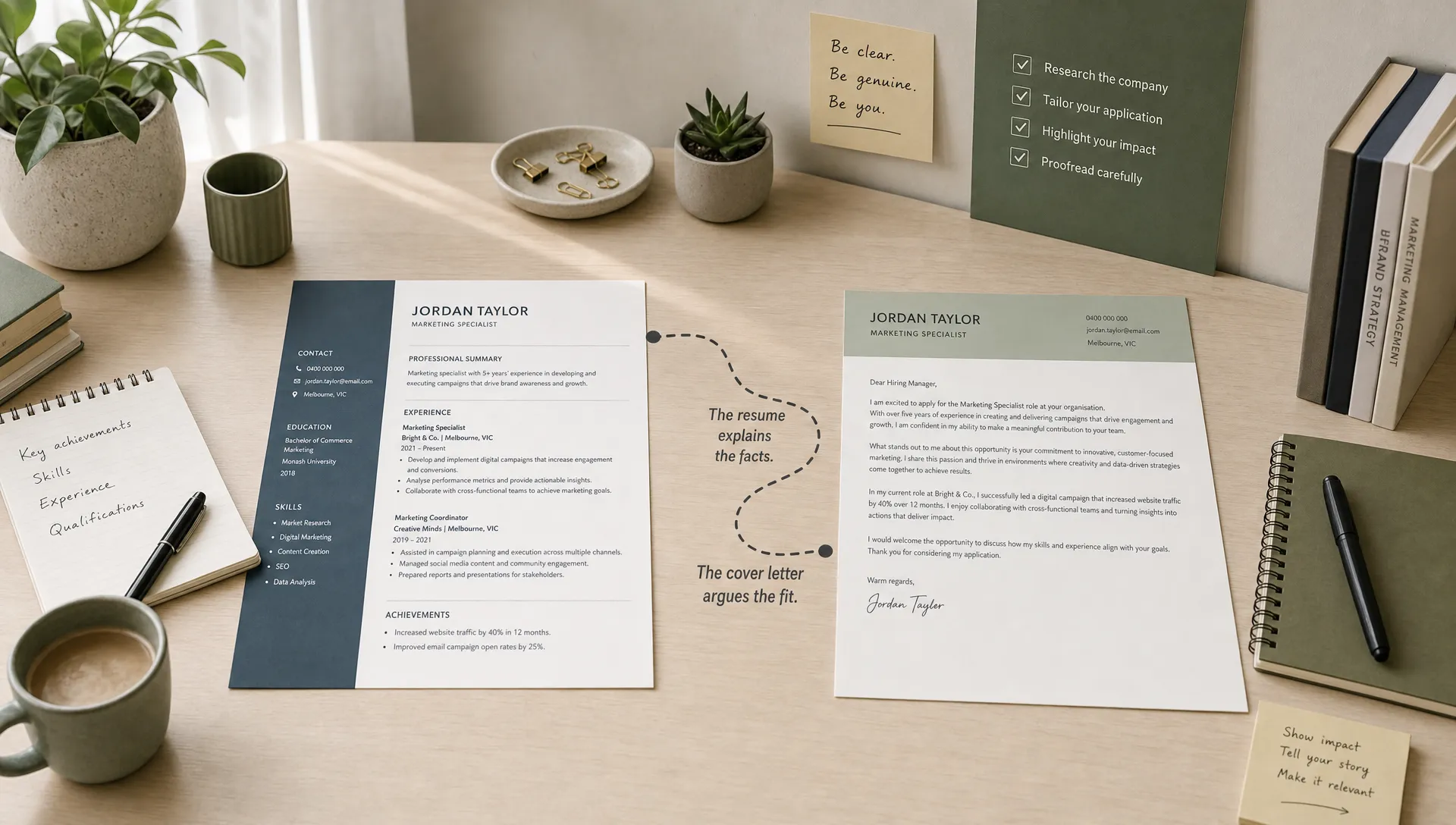
A resume gives evidence. It shows your education, work history, skills, achievements and experience. A cover letter gives context. It explains why that evidence matters for the specific role in front of you. If you are unsure where the line sits, Versadox has a helpful guide on the difference between a cover letter and resume.
In 2026, a strong cover letter can help you:
- Explain why you are applying for this role rather than any available job
- Translate unrelated experience into relevant value
- Show communication skills before the interview
- Address a career change, study transition or employment gap without overexplaining
- Highlight one or two achievements that match the job ad
- Demonstrate that you understand the employer’s work, customers or priorities
This is especially useful when your resume is not a perfect match on paper. A career changer moving from retail into customer success, for example, may need to show how complaint handling, product knowledge and high-volume communication apply to a client-facing SaaS role. A graduate with limited paid experience may need to explain how placements, group projects or internships prove readiness.
When a cover letter is definitely needed
If the job ad asks for a cover letter, send one. Treat it as part of the assessment, not as an optional courtesy. Some employers ask because they want to assess written communication, attention to detail or motivation for the role. Others use it to separate candidates who can follow instructions from those sending mass applications.
You should also write a cover letter when the role involves written communication. That includes marketing, administration, consulting, policy, HR, customer success, sales, operations, teaching, community services and many graduate programs. In these cases, the cover letter is a work sample in disguise.
A cover letter is also worth sending when your application needs explanation. This often applies if:
- You are changing careers or industries
- You are applying for your first professional role
- You have a non-linear work history
- You are returning to work after time away
- You are applying for a role that is slightly above your current experience level
- You have strong transferable skills but not the exact job title employers expect
It also helps when you have a genuine reason for wanting that company. Employers can usually tell the difference between “I am excited to apply” and a specific reason linked to their work. For example, if you are applying to a niche business software company, your cover letter might refer to the type of operational problem the product solves. A candidate researching a platform like software that runs pool service companies could mention an interest in field service workflows, customer communication or scheduling challenges, if those topics genuinely connect to the role.
That level of specificity shows effort. It also tells the hiring manager you are not sending the same letter to 40 employers.
When you can skip the cover letter
There are situations where a cover letter is not worth your time.
If the application portal has no place to upload one, do not force it into another field unless the instructions invite you to. If the job ad clearly says “resume only,” follow that instruction. If you are applying through a fast screening process where the employer only reviews structured answers, those answers may matter more than a separate letter.
You can also skip a cover letter when you would only send a generic one. A bland letter that says you are hardworking, passionate and a team player rarely improves your chances. In a crowded applicant pool, generic writing can make you look less prepared, not more.
A better approach is to prioritise quality over volume. For lower-priority roles, you might submit a tailored resume only. For roles that are a strong fit, highly competitive or important to your career direction, invest the time in a tailored cover letter.
This is where job search strategy matters. If you are applying for anything and everything, cover letters will quickly feel like a burden. If you are focused on a smaller number of roles that match your target direction, writing a good letter becomes easier because you actually know what you are trying to prove.
What changed because of AI?
AI has changed cover letters in two opposite ways.
First, it has made it easier to draft a letter quickly. That is useful if you struggle to structure your thoughts or translate experience into professional language. AI can help you start, simplify, edit and adapt your writing.
Second, it has made generic cover letters more common. Hiring managers now see a lot of polished paragraphs that say very little. The writing may be grammatically clean, but the content is vague. It could apply to any role, at any company, in any industry.
That means your cover letter needs human judgement. You do not need to sound overly formal. You need to sound specific.
A useful 2026 cover letter should answer three questions:
- Why does this role make sense for you now?
- What evidence proves you can do the work?
- Why are you interested in this employer, team or problem area?
If your letter does not answer those questions, it probably does not need to be sent yet.
What a strong cover letter should include
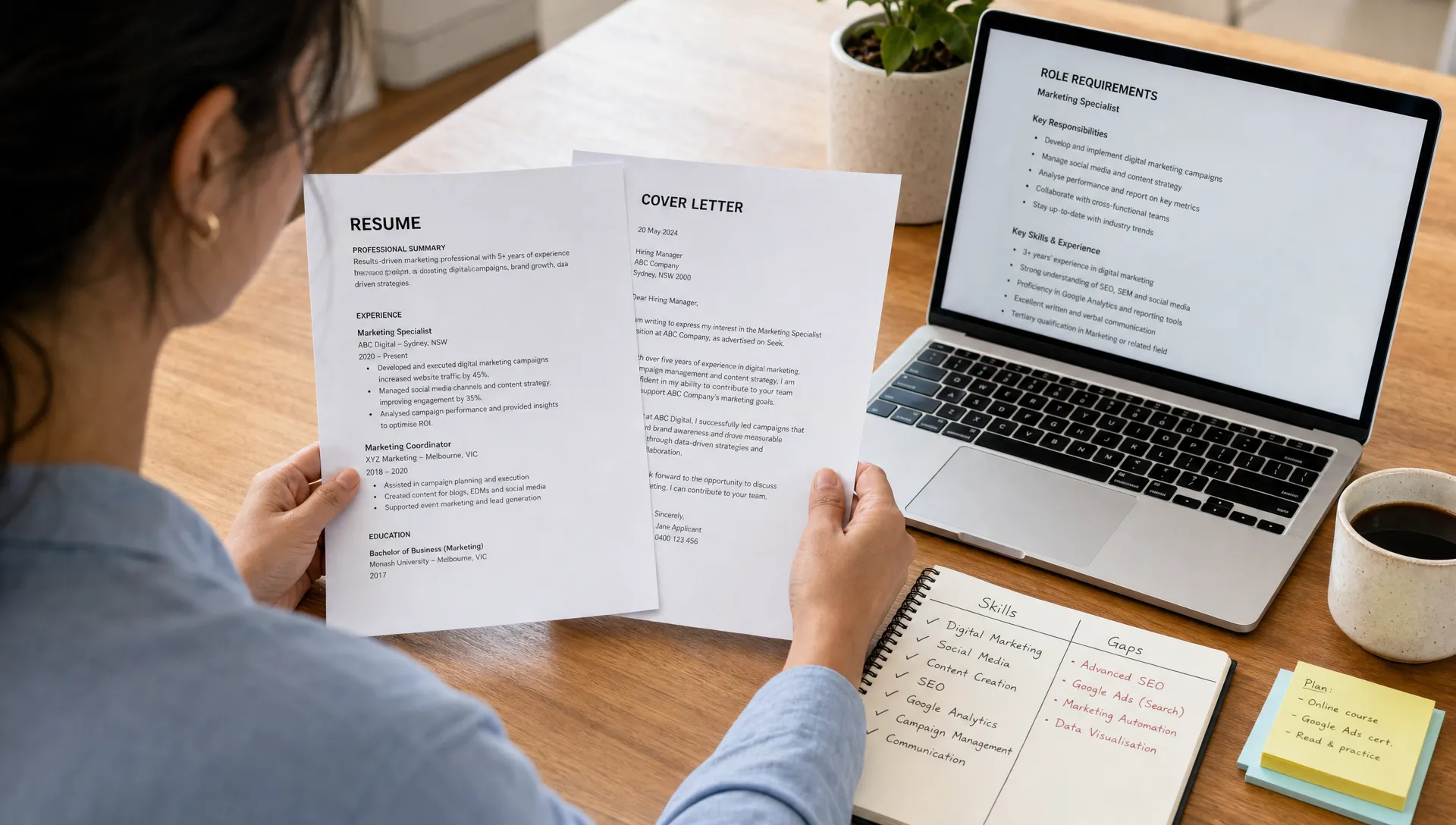
A good cover letter does not need to be long. In most cases, aim for 250 to 400 words. It should be easy to skim, clearly tied to the job ad and focused on evidence rather than personality claims.
Use a simple structure:
- Opening: Name the role and give one clear reason you are a strong match
- Middle: Prove two or three relevant skills with brief examples
- Company fit: Show you understand something specific about the organisation, role or customer problem
- Close: Reaffirm your interest and invite the next step
The strongest letters are selective. You do not need to include every achievement. Pick the evidence that best matches the employer’s priorities.
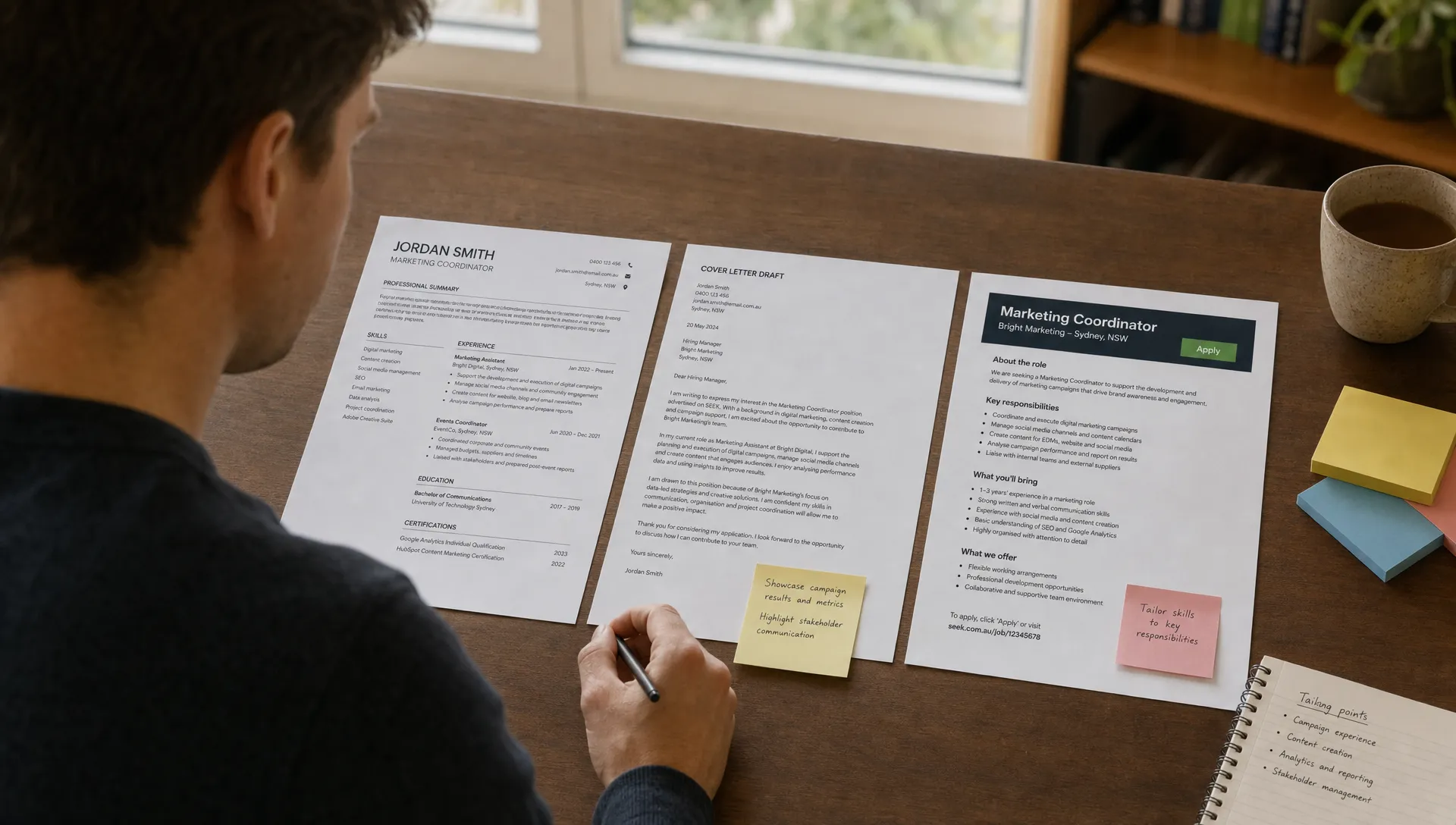
For example, if the job ad asks for stakeholder communication, problem solving and Excel skills, do not spend half the letter discussing your passion for the industry. Show where you used those skills. That might be a university project, internship, part-time job, volunteer role or previous career.
Instead of writing “I have excellent communication skills,” write something more grounded:
“During my retail supervisor role, I handled customer complaints, trained three new team members and coordinated shift handovers during peak trading periods. That experience helped me build clear communication habits under pressure, which I would bring to your customer support team.”
That kind of sentence does more than claim a skill. It gives the reader a situation, action and transferable value.
If you want practical writing steps, the Versadox guide on how to write cover letters that win more interviews goes deeper into structure, examples and tailoring.
Common cover letter mistakes in 2026
The biggest mistake is sending a letter that feels separate from the role. Hiring managers should be able to see the job ad reflected in your wording, examples and priorities. If they cannot, the letter may read as recycled.
Other common mistakes include:
- Repeating your resume line by line
- Opening with a vague statement about being passionate and motivated
- Overusing AI-generated language without adding your own proof
- Writing too much about what you want and not enough about what you offer
- Ignoring selection criteria or required skills from the job ad
- Using the same letter for unrelated roles
- Apologising for gaps or lack of experience instead of reframing relevant strengths
A cover letter should not be a confession, a biography or a motivational speech. It is a short argument for fit.
How to decide whether to write one
Before you write a cover letter, ask yourself whether it will improve the application. If the answer is yes, write it properly. If the answer is no, put that energy into tailoring your resume, updating your profile or choosing better-fit roles.
Use this simple decision filter:
- Write one if the employer asks for it: This is part of following the application instructions.
- Write one if the role is important to you: A well-targeted letter can help you compete.
- Write one if your resume needs context: This is common for graduates, career changers and return-to-work applicants.
- Write one if communication is part of the job: Your letter becomes evidence of how you write.
- Skip it if it will be generic: A low-effort cover letter rarely adds value.
- Skip it if the application process excludes it: Follow the employer’s requested format.
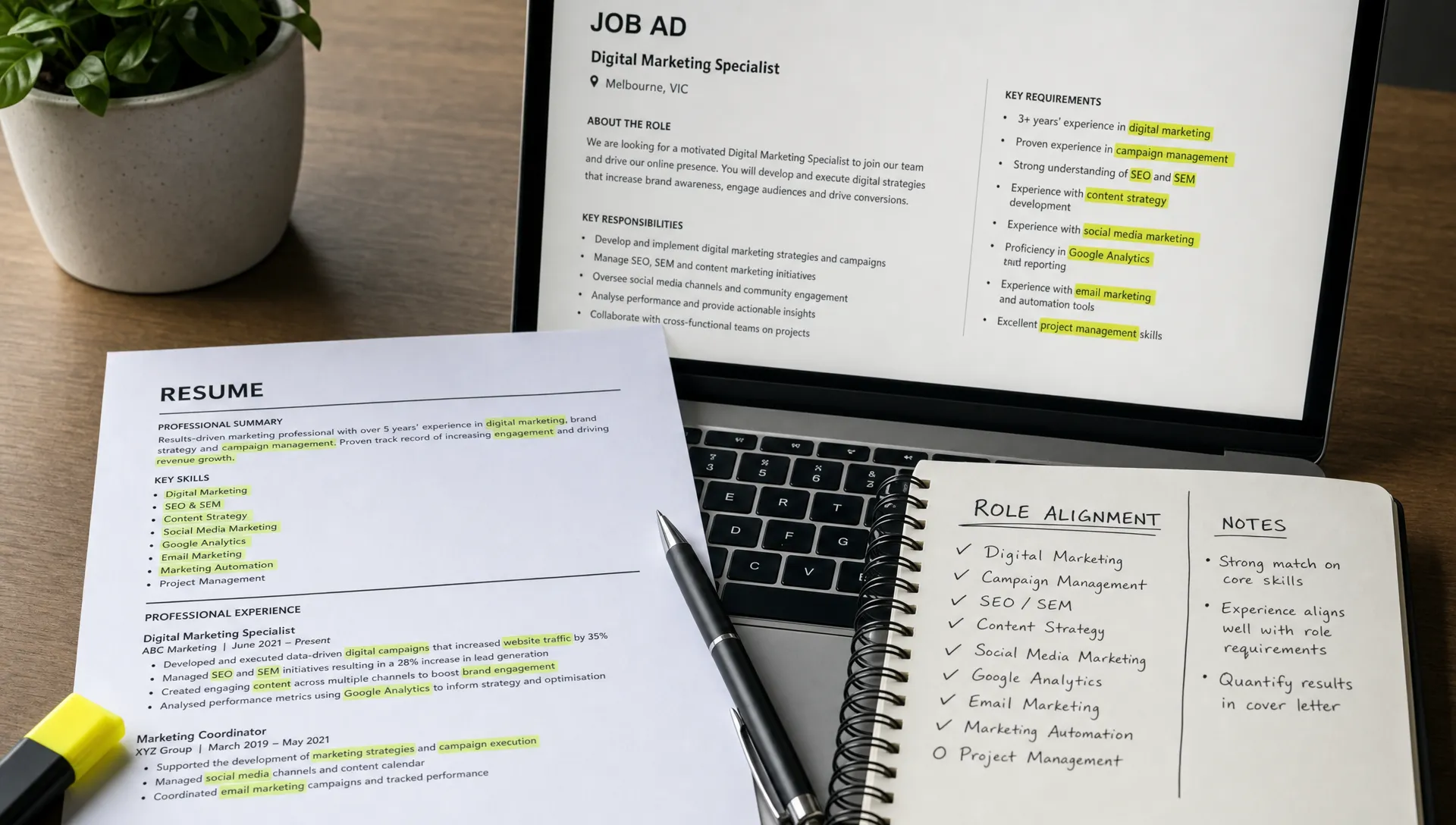
This is also where a platform like Versadox can help. Versadox is designed to help job seekers compare applications against real roles, identify gaps and improve resumes and cover letters before applying. If you are unsure whether your current application is strong enough, role alignment insights and market readiness scoring can help you make that decision with more clarity.
For a broader view of what employers expect now, you can also read Versadox’s guide to professional job applications in 2026.
Are cover letters needed for graduate roles?
Often, yes. Graduate employers may receive applications from candidates with similar degrees, internships and entry-level experience. A cover letter gives you a chance to explain your direction, not just your credentials.
For students and graduates, the letter should not pretend you have years of experience. It should show readiness. Focus on relevant coursework, placements, projects, casual work, volunteering or leadership experience. Employers hiring early-career candidates usually know you are still developing. They want to see whether you understand the role and can connect your experience to it.
A graduate cover letter might explain why a consulting, engineering, accounting, marketing or policy pathway fits your strengths. It might also show how a project taught you to analyse data, work with ambiguity, present findings or manage deadlines.
That is valuable because early-career resumes can look thin without context.
Are cover letters needed for career changers?
For career changers, cover letters are often worth the effort. Your resume may include strong experience, but the hiring manager may not immediately understand how it transfers.
A good career change cover letter does three things. It names the shift directly, shows the connection between your previous work and the target role then gives evidence that you have started building the required skills.
For example, someone moving from hospitality into HR could point to rostering, conflict resolution, onboarding casual staff and handling employee availability. Someone moving from teaching into learning design could highlight curriculum planning, stakeholder communication and assessment design.
The goal is not to hide your previous career. The goal is to translate it.
Frequently Asked Questions
Are cover letters needed in 2026 for every job? No. Cover letters are needed when the employer requests one, when your resume needs context or when the role values communication. They are less useful when the application process does not allow one or when the letter would be generic.
Do recruiters actually read cover letters? Some do and some only read them after the resume passes an initial screen. That does not make them pointless. A strong cover letter can support your application at the shortlist stage, especially for competitive or communication-heavy roles.
Is it bad to use AI to write a cover letter? It is not bad to use AI for structure, editing or idea generation. The risk is sending a letter that sounds generic. Add your own examples, role-specific reasoning and evidence so the final version reflects your actual experience.
How long should a cover letter be in 2026? Most cover letters should be around 250 to 400 words. Shorter is fine if it is specific and complete. Longer letters are harder to skim and often include details that belong in the resume or interview.
Should I submit a cover letter if it is optional? Submit one if it strengthens your application. If the role is a strong fit, highly competitive or important to your career goals, a tailored optional cover letter can help. If you would only send a generic version, skip it.
Apply with more clarity, not more guesswork
Cover letters are still needed in 2026, but only when they add something meaningful. The best ones explain fit, prove relevant strengths and make your application easier to understand.
If you are not sure whether your resume and cover letter are aligned with the roles you want, Versadox can help you check before you apply. Build stronger application documents, compare them against real roles, identify gaps and make guided improvements so you can apply with more confidence.





.svg)