


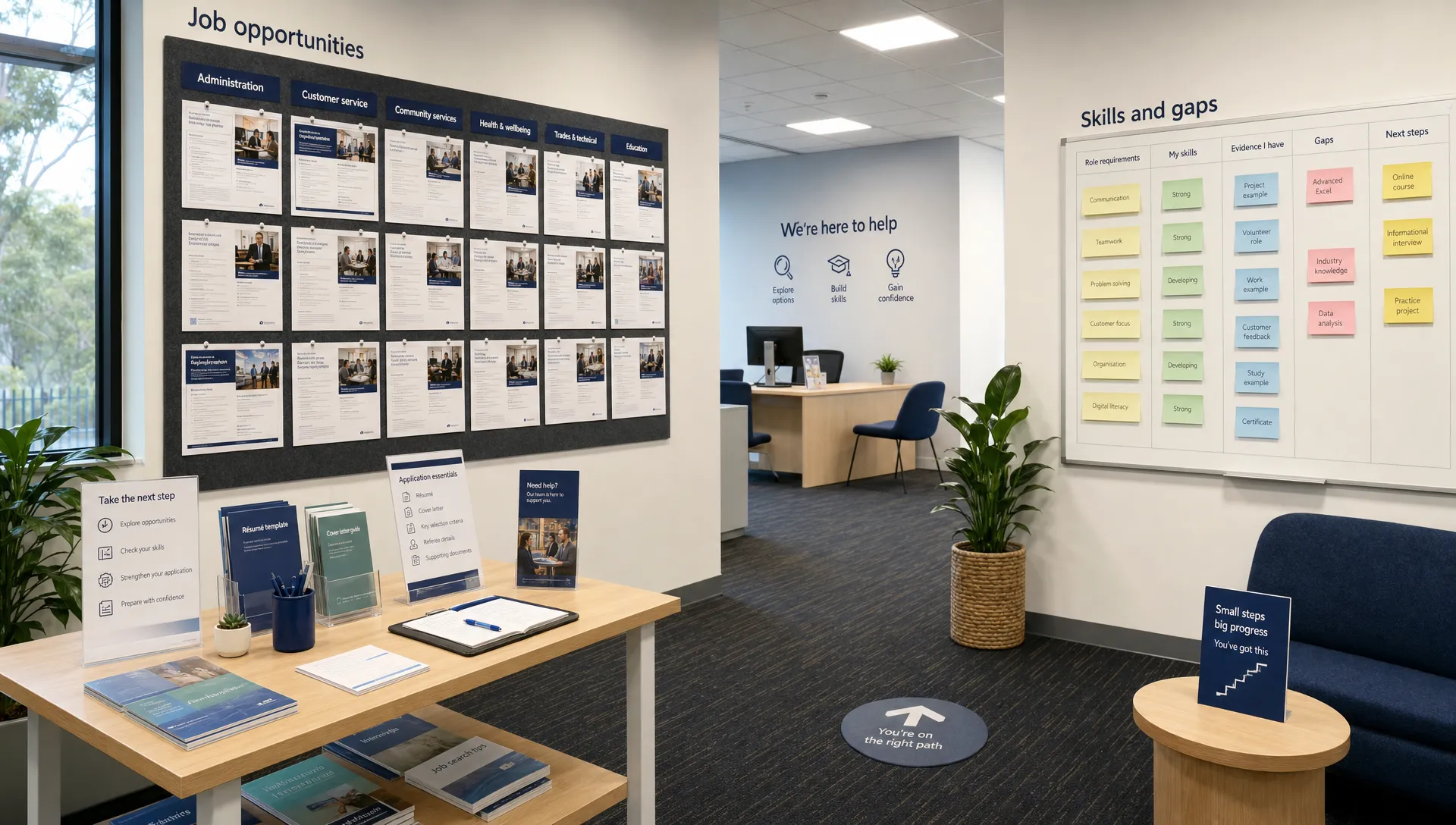
A job summary has only a few lines to work with, but it often shapes the first impression of your resume. If it is too broad, it sounds like it could belong to anyone. If it is too narrow, it can undersell the range of value you bring. The goal is not to write the most impressive paragraph possible. It is to write a job summary that makes sense for the role in front of you.
For students, graduates and career changers, this is especially important. You may not have a long list of directly matching job titles, so your summary needs to connect the dots for the reader. It should show that you understand what the role needs, that you have relevant evidence and that you are not guessing your way through the application.
This guide focuses on writing a role-fit summary for the top of your resume. If you want the broader foundation first, Versadox also has a guide on how to write a strong job summary for your resume. Here, we will go deeper into tailoring that summary so it matches a specific job without sounding forced.
A job summary fits the role when it reflects the employer’s priorities, not just your personal history. That does not mean copying the job ad or stuffing in every keyword. It means choosing the parts of your experience that are most relevant to the work, then presenting them in language the employer recognises.
A strong role-fit summary usually does three things:
For example, a generic summary might say you are “hardworking, motivated and experienced in customer service”. A more role-fit version might say you are a “customer service professional with experience resolving high-volume enquiries, updating client records and supporting calm communication across phone and email channels”. The second version gives the employer something to evaluate.
The difference is specificity. You are not trying to sound bigger than you are. You are trying to sound relevant.
Before you write the summary, slow down and study the role. A job ad is not only a description. It is a set of clues about how the employer will judge candidates.
Look for repeated words, must-have skills, work environment details and the outcomes the person will be expected to support. If the ad mentions “stakeholder communication” three times, that is not decorative language. If it talks about “fast-paced support”, “ticket resolution” and “documentation”, the employer is likely screening for someone who can handle volume, structure and follow-through.
Pull out the role’s most important signals:
Once you have these signals, decide which ones you can honestly prove. This is where tailoring becomes strategic rather than cosmetic. If you need a deeper process for reading role requirements, use the same approach explained in matching your resume to the job you want: identify what the employer values, then align your evidence to that value.
Many job summaries fail because they start with adjectives. “Passionate”, “dynamic”, “results-driven” and “highly motivated” can sound fine, but they do not carry much weight without proof.
Start with evidence instead. Ask yourself what you can genuinely point to from work, study, volunteering, internships, placements, projects or career-change experience. Then decide which evidence belongs in the summary.
For a customer support role, the evidence might include handling enquiries, using a CRM, de-escalating complaints or meeting response time expectations. For a graduate marketing role, it might include campaign coursework, social media scheduling, content writing, analytics tools or an internship. For an entry-level data role, it might include Excel modelling, SQL basics, dashboards, research projects or reporting tasks.
This is a summarising skill as much as a resume-writing skill. You are compressing a larger story into the few points that matter most. Students and recent graduates may find it helpful to think about the same principle used in academic writing: identify the core argument before reducing the detail. This guide on writing a clear summary of a thesis explains that idea in an academic context, and the same discipline applies when you are distilling your career evidence for an employer.
Your job summary should not include everything you have done. It should include the things that make the rest of your resume easier to understand.
A role-fit job summary does not need to be complicated. In most cases, three to four lines are enough. The best structure is simple: identity, match and proof.
Open with the professional label that makes sense for this application. This may be your current job title, your target role or a broader identity that connects your background to the job.
Examples include:
Your identity line should help the employer place you quickly. If you are changing careers, do not hide that shift. Frame it through transferable strengths.
Next, name the two or three strengths that align most closely with the job ad. These should not be random strengths. Choose them because the employer has signalled they matter.
For example, if the role focuses on coordination, reporting and stakeholder follow-up, your summary should not lead with unrelated creative skills. If the role focuses on client communication and case management, your summary should make communication, organisation and follow-through obvious.
This section can include tools, environments, methods or outcomes. The key is to keep it grounded.
A proof signal is a small piece of credibility. It does not need to be a full achievement, but it should make the claim feel real.
Proof signals can include:
If you can include a number naturally, use it. If you cannot, do not invent one. Context can be just as useful as a metric when it is specific.

The easiest way to see role fit is to compare summaries written for different targets. The examples below are not templates to copy word for word. Use them to understand how the emphasis changes depending on the job.
Generic version: Motivated and organised worker with strong communication skills and a positive attitude. Looking for an opportunity to grow in an administration role.
Role-fit version: Organised early-career administration candidate with experience managing customer enquiries, updating records and supporting scheduling tasks in busy service environments. Confident using Microsoft Office, maintaining accurate information and communicating clearly with clients and team members.
The role-fit version works better because it names the tasks an administration employer expects. It does not rely on personality traits alone.
Generic version: Recent graduate with a passion for marketing, social media and creativity. Strong team player with excellent written communication skills.
Role-fit version: Recent marketing graduate with project and internship experience across social media scheduling, campaign research and content writing. Skilled in turning audience insights into clear messaging, with practical exposure to analytics reporting, Canva and collaborative campaign planning.
This version connects study and early experience to real marketing tasks. It also uses tools and activities that an employer can match to the role.
Generic version: Experienced professional seeking a new challenge in data analysis. Fast learner with strong attention to detail and problem-solving skills.
Role-fit version: Operations professional transitioning into data analysis, with experience using Excel to track performance, identify process gaps and prepare weekly reporting for managers. Currently building SQL and dashboarding skills, with a strong foundation in business process improvement and evidence-based decision-making.
This summary is honest about the transition. It does not pretend the candidate has years of analyst experience, but it shows a relevant bridge between past work and the target role.
Generic version: Friendly and hardworking customer service worker with great communication skills and a desire to help people.
Role-fit version: Customer service professional with experience resolving client enquiries, documenting issues and supporting positive customer outcomes across phone, email and in-person channels. Strengths include clear communication, de-escalation, CRM updates and follow-through in fast-paced service settings.
The improved version makes the candidate easier to imagine in a customer success environment because it includes channels, systems and behaviours that match the work.
Applicant tracking systems can influence how resumes are processed, but the summary still needs to read well for a person. The best approach is to use the employer’s language where it is accurate, then support it with real evidence.
If the job ad says “stakeholder engagement” and you have genuinely worked with internal teams, clients, suppliers, students or community members, it is reasonable to use that phrase. If the ad asks for “data visualisation” and you have only made basic charts in Excel, be precise rather than inflated. You might say “experience preparing Excel-based reports and visual summaries” instead.
A useful rule is this: every phrase in your summary should survive a follow-up interview question. If an employer asks, “Can you tell me about your stakeholder engagement experience?” you should be able to answer with a real example.
This matters because confidence and accuracy work better together. If you tend to soften your experience too much, or you worry about sounding exaggerated, Versadox has a practical guide on showing skills and experience without overselling.
A student, graduate, experienced worker and career changer should not write the same kind of summary. The structure may be similar, but the source of evidence changes.
Students can draw from placements, coursework, part-time work, volunteering, leadership roles and projects. The summary should make the connection between those experiences and the role’s practical needs.
Graduates should highlight discipline knowledge, internships, project work, tools and workplace exposure. The best graduate summaries avoid vague enthusiasm and show readiness to contribute in a junior role.
Career changers should lead with transferable experience, then name the new direction clearly. A good career-change summary reduces confusion by explaining why the previous background is relevant.
Experienced professionals should be selective. You may have enough experience to fill a page, but the summary should only include the parts that matter to this role. Seniority alone is not always the strongest selling point. Relevance is.
A job summary is short, so every word has to earn its place. These are the mistakes that most often make it feel generic or mismatched:
The last point is common for career changers. If your most recent job is not the closest match, your summary can still bring forward the relevant parts of that work. The employer does not need your full career history in the opening paragraph. They need a clear reason to keep reading.
Before sending your resume, read the job summary against the role one last time. Do not only ask whether it sounds good. Ask whether it fits.
Use this quick check:
If you answer no to more than one of these, revise before applying. A sharper summary can change how the rest of the resume is read.
It is difficult to judge your own resume objectively, especially when you are applying for several roles at once. Versadox is built to help job seekers see how their application lines up with real roles before they apply.
With Versadox, you can audit and score your existing resume against target roles, identify gaps and get guided improvements. Features such as role alignment analysis and market readiness scoring can help you move from a generic application to one that is clearer, more focused and easier for employers to assess.
That does not mean your resume should become robotic. The aim is to make your real experience easier to understand in the context of the role you want.
How long should a job summary be? A job summary is usually three to four lines, or about 50 to 90 words. It should be long enough to show role fit but short enough for a recruiter to scan quickly.
Should I change my job summary for every application? Yes, if the roles are meaningfully different. You do not need to rewrite it from scratch each time, but you should adjust the strengths, tools and evidence so they match the role’s priorities.
Can I write a job summary if I have little experience? Yes. Use evidence from study, projects, placements, part-time work, volunteering or personal projects. Focus on relevant tasks, tools and behaviours rather than years of experience.
Should my job summary include keywords from the job ad? Use relevant keywords only when they accurately describe your experience. The summary should sound natural to a human reader and credible if discussed in an interview.
Is a job summary the same as a career objective? Not exactly. A career objective focuses on what you want. A job summary focuses on what you bring to the employer and why your background fits the role.
A strong job summary is not about making yourself sound perfect. It is about making the match clear. When your opening lines reflect the role’s needs, the employer can understand your relevance faster and read the rest of your resume with more context.
If you want to check whether your resume fits the job before you apply, use Versadox to compare your application against real roles, identify gaps and improve your positioning with more confidence.
This is a div block with a Webflow interaction that will be triggered when the heading is in the view.
Drop your resume in and get a real score in under a minute — plus the single biggest thing holding it back. No account needed.
Get my free score


