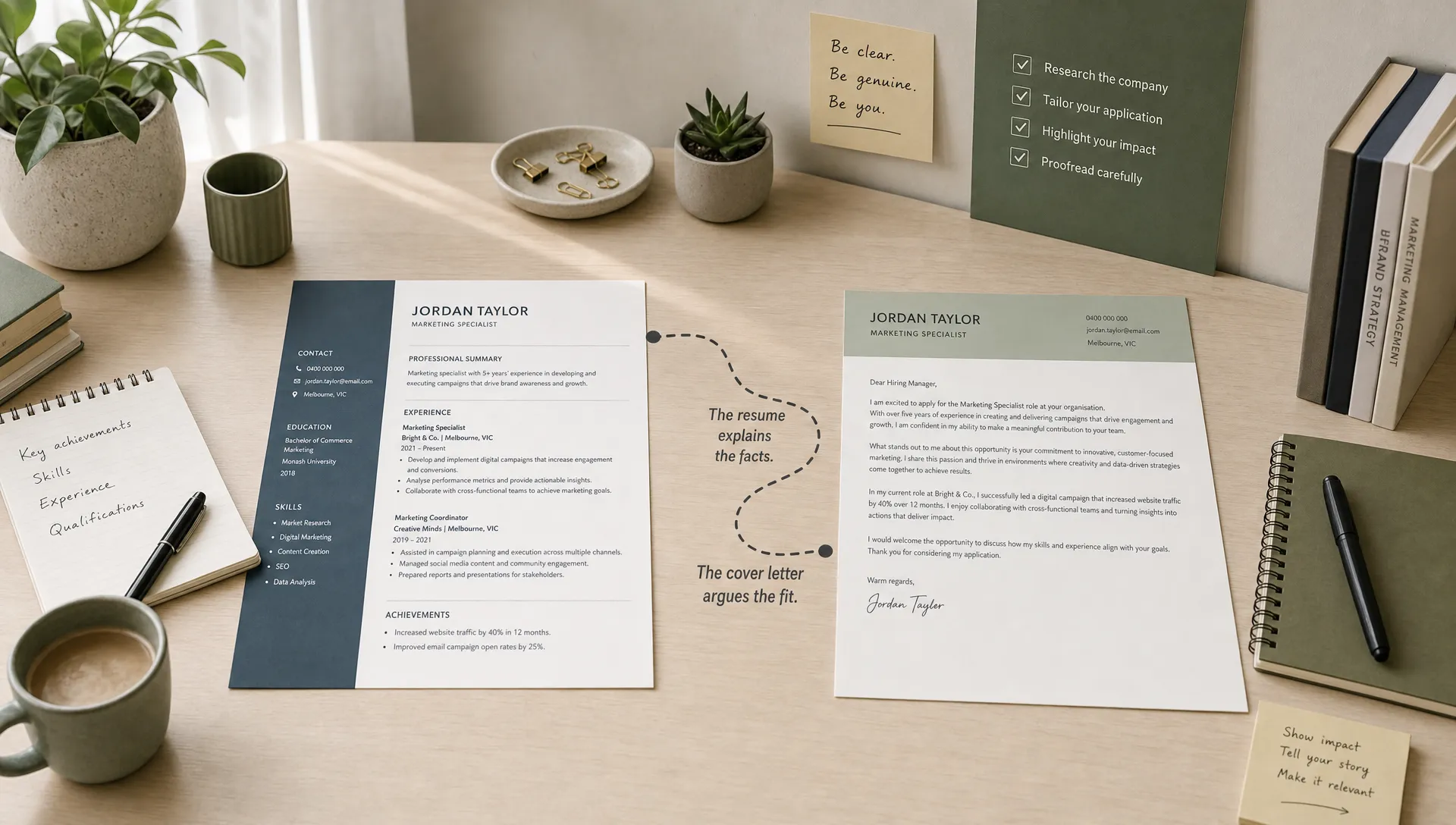
A resume and a job application are closely related, but they are not the same thing. Your resume is one document that summarises your skills, experience and achievements. Your job application is the complete submission you send to an employer, which may include your resume, cover letter, online form, screening answers, portfolio, references and other requested details.
That distinction matters because many job seekers spend all their effort polishing the resume, then weaken the broader application around it. Employers do not review your resume in isolation. They assess whether your whole application answers the role, follows instructions and gives them enough evidence to move you forward.
For students, graduates and career changers, understanding the difference between a job application and resume can make the process feel less confusing. It also helps you stop sending the same generic document to every role and start building applications that match what each employer is actually asking for.
Quick answer: job application vs resume
The simplest way to understand the difference is this: your resume is a career evidence document, while your job application is the full package or process used to apply for a role.
A resume usually explains:
- Who you are professionally
- What roles, education or projects you have completed
- Which skills you can prove through experience
- What achievements make you relevant to the role
- How an employer can contact you
A job application may include:
- Your resume
- A tailored cover letter
- An online application form
- Answers to screening questions
- Responses to selection criteria
- Work rights, availability and salary information
- Academic transcripts, licences or certificates
- Portfolio links, references or work samples
So if an employer asks for a resume, they are asking for one document. If they ask you to complete a job application, they are usually asking for the full submission they will assess.
What a resume does
A resume is designed to give employers a clear, scannable summary of your fit for a role. It should show relevant experience, skills, education, achievements and career direction without making the employer search for the point.
In Australia, the terms resume and CV are sometimes used interchangeably in general job ads, especially outside academia and research. For most graduate, entry-level, business, retail, hospitality, technology and career-change roles, the employer usually expects a concise resume tailored to the job.
A strong resume is not just a work history. It is a structured argument for why you are worth interviewing. It should prioritise the details that match the role and remove details that do not help the employer make a decision.
If you want a deeper foundation, Versadox has a separate guide on what a job resume is and why it matters, which explains how employers read resumes and what strong resumes usually include.
For this article, the key point is that your resume is only one part of your application. It is often the most important document, but it does not replace the rest of the submission.
What a job application does
A job application is the employer’s structured way of collecting everything they need to assess you. Sometimes it is a simple email with a resume attached. Other times it is a multi-step online form with mandatory questions, document uploads and eligibility checks.
The application helps employers compare candidates consistently. A hiring team may need to confirm that you meet the essential requirements before they spend time reading your resume in detail. That is why many applications ask for information that already appears on your resume, such as employment history, education or certifications.
It can feel repetitive, but it serves a different purpose. Your resume is written by you in your chosen format. The application form is controlled by the employer or applicant tracking system, often called an ATS. It standardises the information so recruiters can filter, search and shortlist candidates more efficiently.
A professional application also shows that you can follow instructions. If the job ad asks for a short cover letter, a resume and responses to two questions, sending only a resume may signal poor attention to detail. If you want to understand how expectations have shifted, this guide to what makes a professional job application in 2026 explains the bigger picture.
The key differences that matter
The difference between a job application and resume becomes clearer when you look at how each one works in practice.
Scope
A resume is a single document. A job application is the complete submission.
Your resume might be two pages. Your application could include those two pages plus a cover letter, five screening answers, a portfolio link, your availability and consent to background checks. If you only focus on the resume, you may miss opportunities to strengthen the rest of the application.
Purpose
A resume proves your suitability through selected evidence. A job application helps the employer assess, sort and compare candidates.
For example, your resume might show that you completed a customer service internship and improved response times. The application form might ask whether you can work weekends, whether you have the right to work in Australia or whether you are willing to complete a police check. Both matter, but they answer different questions.
You control the format of your resume. The employer usually controls the format of the job application.
That is why an ATS-ready resume should be clean, readable and easy to parse. It should avoid unnecessary design elements that make the content harder to scan. The application form, on the other hand, may require plain text answers, dropdown selections or strict character limits.
Tailoring
Both should be tailored, but in different ways.
A tailored resume changes the order, wording and emphasis of your skills and experience so the most relevant information appears first. A tailored job application goes further by aligning every part of the submission with the role, including your cover letter, screening answers and examples.
If the role asks for stakeholder communication, your resume might include a bullet about liaising with customers or project teams. Your application answer might then explain a specific situation where you handled competing needs and achieved a clear outcome.
Evidence
A resume provides concise evidence. A job application may ask you to expand that evidence.
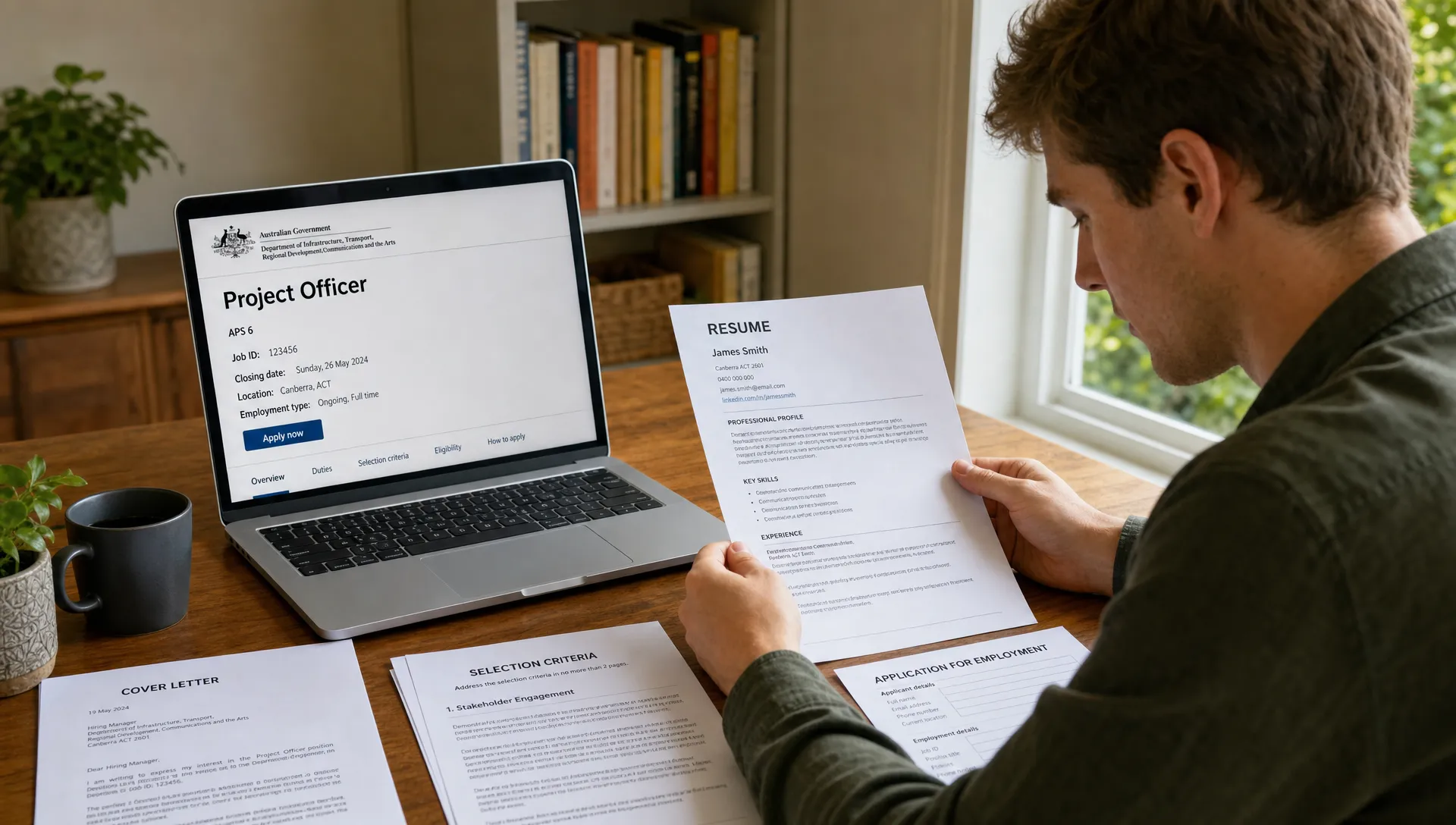
This is common in government, university, healthcare and graduate program applications, where selection criteria or behavioural questions are used. Your resume may list the experience, but the application questions ask you to explain how you used it.
Example: how the same candidate uses both
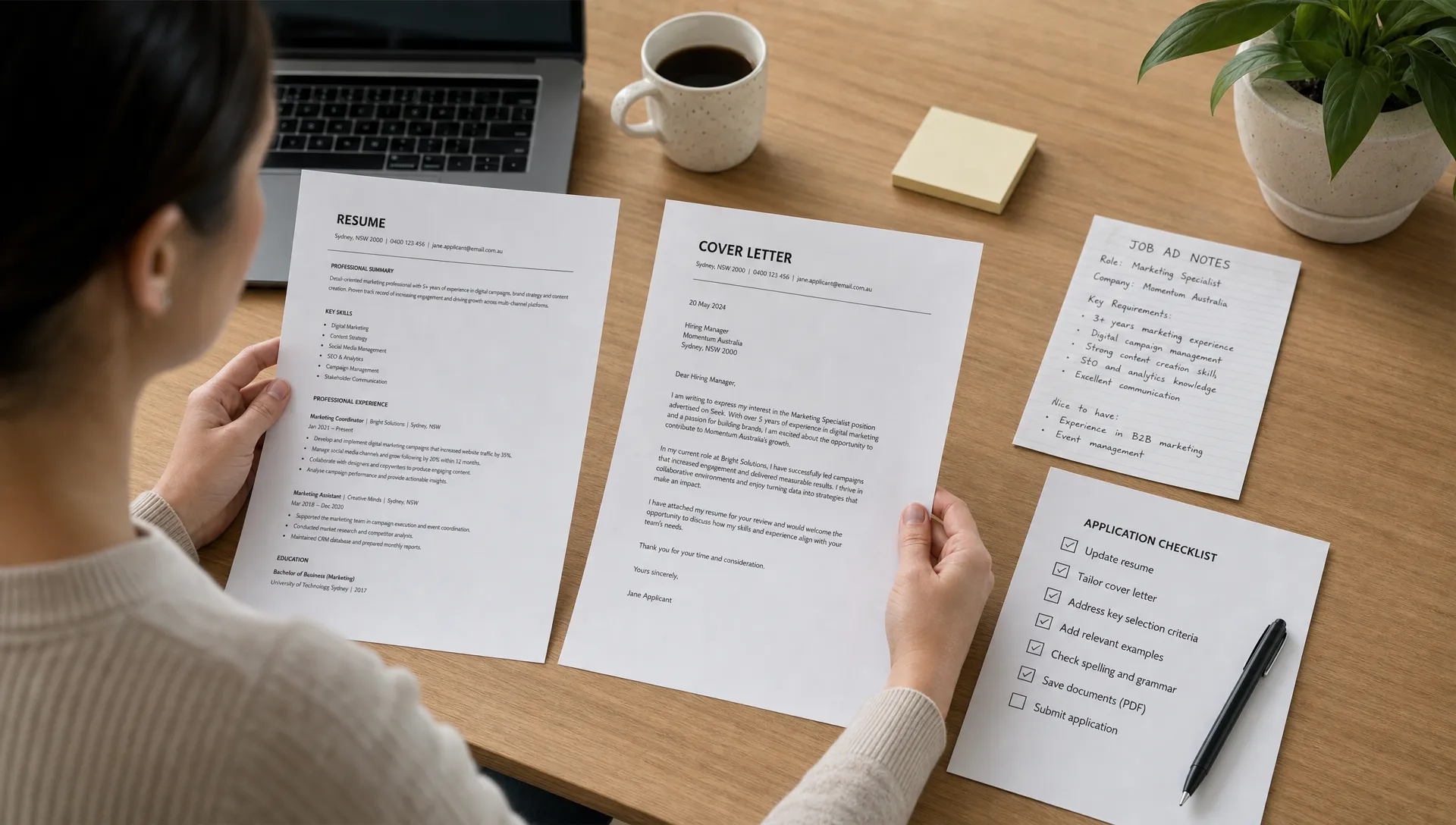
Imagine a recent graduate applying for a marketing assistant role. Their resume includes a marketing degree, a retail job, a university group project, social media volunteering and skills in content writing, analytics and customer communication.
That resume gives the employer a quick view of relevant background. It might include a summary such as: “Marketing graduate with retail customer experience, campaign project work and hands-on social media content skills.” It would then support that claim with education, project examples, work history and measurable achievements where possible.
The job application does more. It may ask the candidate to upload the resume, write a short cover letter, answer why they want the role and describe a time they used data to improve a result.
A weak application repeats the resume in every field. A stronger one uses each part differently. The resume gives the evidence, the cover letter explains motivation and fit, and the screening answer gives a specific example of using analytics in a campaign project.
This is where many early-career applicants can stand out. You may not have years of experience, but you can still show judgement by choosing the right evidence for each part of the application.
Common mistakes when treating them as the same thing
When job seekers confuse a resume with a full job application, they often make avoidable mistakes. These mistakes are especially common when applying under pressure or sending many applications in a short period.
Watch out for these issues:
- Sending the same resume to every employer without changing the summary, skills or experience emphasis
- Writing “see resume” in application fields that ask for specific answers
- Ignoring selection criteria because the experience is already listed on the resume
- Uploading a resume but forgetting the requested cover letter or portfolio link
- Using different job titles, dates or details across the resume and online form
- Overloading the resume with every past task instead of focusing on the target role
- Treating screening questions as admin rather than part of the assessment
The fix is not to make everything longer. It is to make each part do its job. A resume should be concise and evidence-led. An application answer should be specific and responsive. A cover letter should connect your motivation and strongest evidence to the employer’s needs.
If a gap appears while you are tailoring, do not hide from it. Some gaps can be handled through better wording, stronger examples or clearer positioning. Others are real skill gaps. In those cases, short courses, certifications or guided learning can help you build credible evidence, and options like structured upskilling paths can be useful when you need to strengthen your profile before applying.
How to build a stronger job application from your resume
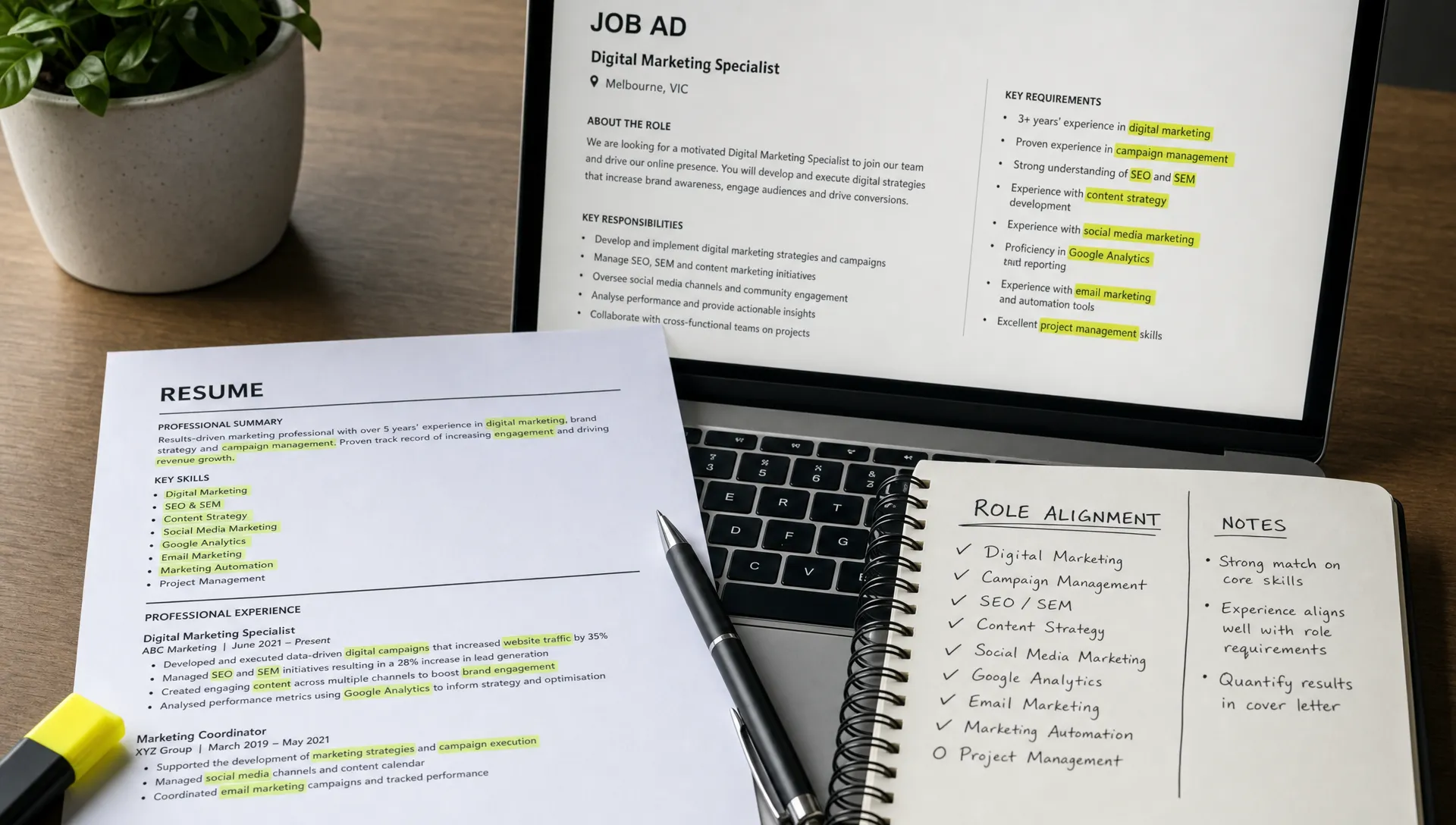
Start with the job ad, not your existing resume. Read the responsibilities, required skills and selection criteria carefully. Then highlight the repeated themes. If communication, reporting and stakeholder support appear throughout the ad, those themes should be visible across your resume and application.
Next, adjust your resume so the most relevant proof appears early. This may mean rewriting your summary, moving certain skills higher or changing experience bullets to reflect the language of the role. Versadox has a practical guide on how to match your resume to the job you want if you need a step-by-step approach.
Then treat the application fields as assessment opportunities. If a question asks why you want the role, do not only say you are passionate. Connect your answer to the employer, the responsibilities and the evidence in your background. If a question asks about experience with a tool or skill, answer directly before adding context.
Before submitting, check consistency. Dates, job titles, education details and contact information should match across the resume, application form and cover letter. Inconsistencies can look careless, even when they are accidental.
Finally, review the whole application as one story. The employer should understand what role you are targeting, why you fit and what evidence supports your claim. If one part feels disconnected, revise it before you apply.
Do you always need both?
Not always, but often.
Some roles only ask for a resume. Others require a resume and cover letter. Many larger employers, recruiters and graduate programs use online application systems that ask for a resume plus structured questions.
If a job ad gives specific instructions, follow them exactly. When the instructions are unclear, a targeted resume is usually the minimum. A short, relevant cover letter can also help when you need to explain a career change, limited experience, relocation, study background or strong motivation for the role.
The main rule is simple: do not assume your resume will carry the entire application. Employers may read your screening answers first. They may filter by eligibility details before opening your resume. They may compare your cover letter with your resume to see whether the application feels tailored or generic.
Frequently Asked Questions
Is a job application the same as a resume? No. A resume is one document that summarises your skills, experience and achievements. A job application is the full submission or process, which may include your resume, cover letter, online form, screening answers and other requested materials.
Can I use the same resume for every job application? You can, but it usually weakens your chances. A better approach is to keep a strong base resume, then tailor the summary, skills and experience bullets to match each role.
Why do employers ask me to enter information that is already on my resume? Employers use application forms to standardise candidate information, check eligibility and support ATS filtering. Even if the information appears on your resume, complete the form carefully and consistently.
What matters more, the resume or the job application? The resume is often the central document, but the full application matters. A strong resume can be undermined by incomplete answers, missing documents or generic responses.
Should my cover letter repeat my resume? No. Your cover letter should connect your strongest evidence to the role and explain why you are applying. It should support the resume, not copy it line by line.
Apply with more clarity
Knowing the difference between a job application and a resume helps you apply with more intention. Your resume proves your value, but the wider application shows how well that value fits the role.
Versadox helps job seekers build stronger resumes and cover letters, compare their applications against real roles, identify gaps and improve their readiness before applying. If you are a student, graduate or career changer, it can help you move from guessing to applying with clearer evidence, stronger alignment and more confidence.





.svg)