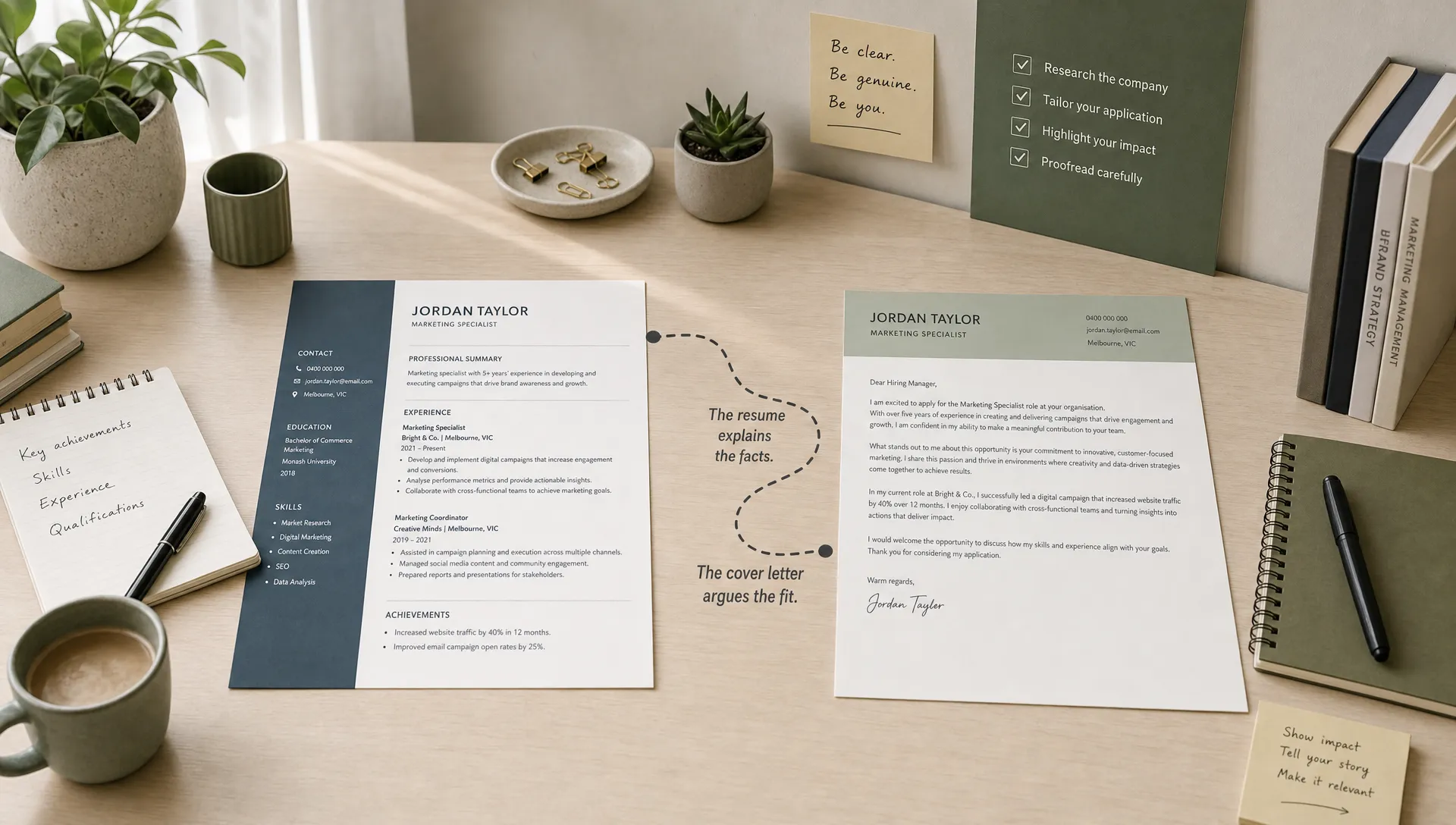
LinkedIn Easy Apply is tempting for good reason. When you are juggling uni, work, a career change or a long list of roles, being able to apply in seconds feels efficient. It can also feel like a relief when traditional application forms ask you to re-enter everything already written in your resume.
But speed changes behaviour. The easier it is to apply, the easier it is to send a generic resume to a role that needed a sharper match. That is why LinkedIn Easy Apply can help or hurt depending on how you use it.
The goal is not to avoid LinkedIn Easy Apply altogether. It is to know when the feature supports your job search, when it weakens your positioning and how to use it as part of a smarter application strategy.
What LinkedIn Easy Apply actually does
LinkedIn Easy Apply lets you apply to some jobs directly through LinkedIn instead of being sent to the employer's website. In many cases, you submit your LinkedIn profile, contact details and a resume attachment. Some employers add screening questions about availability, work rights, location, salary expectations or specific skills.
The feature reduces friction for both sides. Job seekers can apply faster. Recruiters can collect applications quickly. That convenience is useful, but it also means popular roles can attract a high volume of applicants who have not done much tailoring.
In practical terms, LinkedIn Easy Apply works best when your profile and resume already make a clear case for the role. If your application needs explanation, context or a tailored cover letter to make sense, the shortcut may not give you enough room.
Pros of LinkedIn Easy Apply
LinkedIn Easy Apply has a real place in a modern job search. It is not just a lazy option or a numbers game. Used selectively, it can save time and help you move quickly when the role fit is obvious.
It saves time on straightforward applications
Some roles do not need a long application process. If the job ad is clear, your experience lines up well and the employer mainly needs a resume, Easy Apply can be efficient.
This is especially helpful when you are applying for roles in a similar field, using a resume that has already been tailored for that type of position. For example, a marketing graduate applying for several entry-level coordinator roles may not need to rebuild each application from scratch if the required skills are highly similar.
It helps you act while roles are fresh
Many job seekers lose momentum because they overthink every application. By the time the resume is updated, the cover letter is drafted and the company website form is completed, the role may already have hundreds of applications.
Easy Apply can help you respond quickly to relevant listings, especially when you have already prepared a strong core resume and LinkedIn profile. Speed is not everything, but being early can help when recruiters review applications as they arrive.
It can be useful for market testing
If you are unsure whether your resume is landing with employers, a small number of targeted Easy Apply submissions can give you some signal. If you receive profile views, recruiter messages or interview invitations from well-matched roles, your positioning may be working.
If you apply to many aligned roles and get no response, the issue may be your resume, your LinkedIn profile, your role targeting or a gap between what the market wants and what your application proves.
It lowers the barrier for students and career changers
Students, graduates and career changers often hesitate because they feel underqualified. Easy Apply can reduce the emotional friction of starting. That matters when your biggest challenge is getting into motion.
The risk is applying too broadly. A career changer still needs to translate experience into the employer's language. A student still needs to show evidence through projects, placements, casual work, volunteering or coursework. The button is easy, but the positioning still has to work.
Cons of LinkedIn Easy Apply
The downsides of LinkedIn Easy Apply usually come from the same thing that makes it attractive: low effort. When applications take seconds, candidate quality varies widely and employers may receive a flood of weak submissions.
It can create crowded applicant pools
Low-friction applications attract volume. That does not mean every Easy Apply role is impossible, but it does mean you should expect competition. If your resume looks like everyone else's or does not match the job ad quickly, it may not get much attention.
Recruiters are usually scanning for evidence. They want to see relevant skills, recent experience, measurable outcomes and a clear match to the role. A generic resume can disappear in a crowded pool because there is no obvious reason to keep reading.
It gives you less room to explain context
Some applications need more explanation than a quick resume upload can provide. This is common when you are changing industries, returning to work, relocating, applying from overseas or aiming for a role that stretches beyond your current title.
For example, if a role involves international relocation, you may need to show that you understand the practical move as well as the job itself. Someone considering Europe-based opportunities might first review guidance on moving to Poland from the UK before applying, because location, timing and legal requirements can affect how credible the application appears.
If your situation needs context, an employer website application or a tailored cover letter may serve you better than a quick submission.
It can make your job search too reactive
Easy Apply encourages scrolling, clicking and hoping. That can feel productive, but it may distract you from higher-value work such as refining your target roles, improving your resume, contacting relevant people or building proof of skills.
A job search built only on Easy Apply can become a feedback-free loop. You apply more, hear less and assume the market is impossible. Sometimes the real issue is that the application strategy is too broad.
It depends heavily on your LinkedIn profile
When you use LinkedIn Easy Apply, your profile becomes part of the application. If your headline is vague, your experience is thin or your skills do not match the roles you want, you may weaken your application without realising it.
Your resume and profile do not need to be identical, but they should support the same story. If your resume says you are targeting data analyst roles and your LinkedIn profile still reads like a retail supervisor profile with no analytics focus, the employer may see uncertainty rather than potential.
Best uses for LinkedIn Easy Apply
LinkedIn Easy Apply works best when the role is a strong match and your application assets are already aligned. It is a distribution tool, not a substitute for positioning.
Use it when:
- The role matches your experience, skills and work rights clearly.
- Your resume has already been tailored for that job family.
- Your LinkedIn profile supports the same target role as your resume.
- The job ad does not ask for a detailed cover letter, portfolio or selection criteria.
- You can answer the screening questions honestly and confidently.
- The employer is likely using LinkedIn as a primary sourcing channel.
The best candidates do not use Easy Apply as a shortcut around preparation. They prepare first, then use the button when the application does not need extra explanation.
If you are not sure whether your resume is close enough to the role, start by learning how to match your resume to the job you want. That step is more valuable than sending another five generic applications.
When not to use LinkedIn Easy Apply
There are times when applying directly through the employer's website is smarter. A longer process can feel annoying, but it may give you more control over how your experience is presented.
Avoid relying on Easy Apply when:
- The role asks for a tailored cover letter or detailed written responses.
- You need to explain a career change, employment gap or relocation plan.
- The role is senior, specialised or highly relationship-driven.
- You need to upload a portfolio, transcript, licence, visa document or certification.
- The job ad includes selection criteria that need direct evidence.
- Your LinkedIn profile is not updated or does not match the target role.
This does not mean you can never use Easy Apply for competitive roles. It means you should choose the channel that gives your application the best chance of being understood.
How to use LinkedIn Easy Apply without weakening your application
The smartest approach is to treat Easy Apply as the final step, not the whole strategy. Before you submit, make sure the employer can see the match quickly.
Start with the job ad
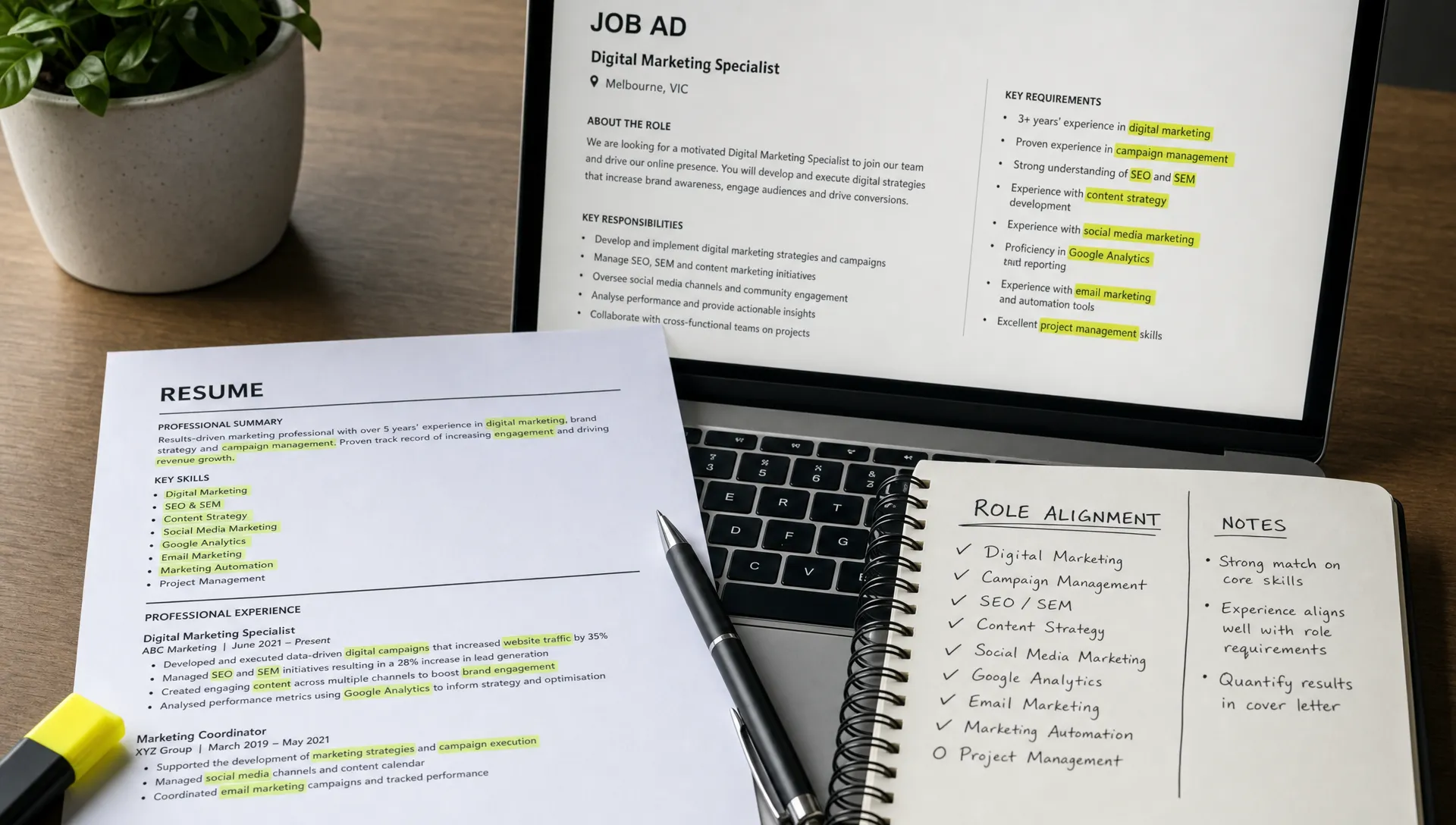
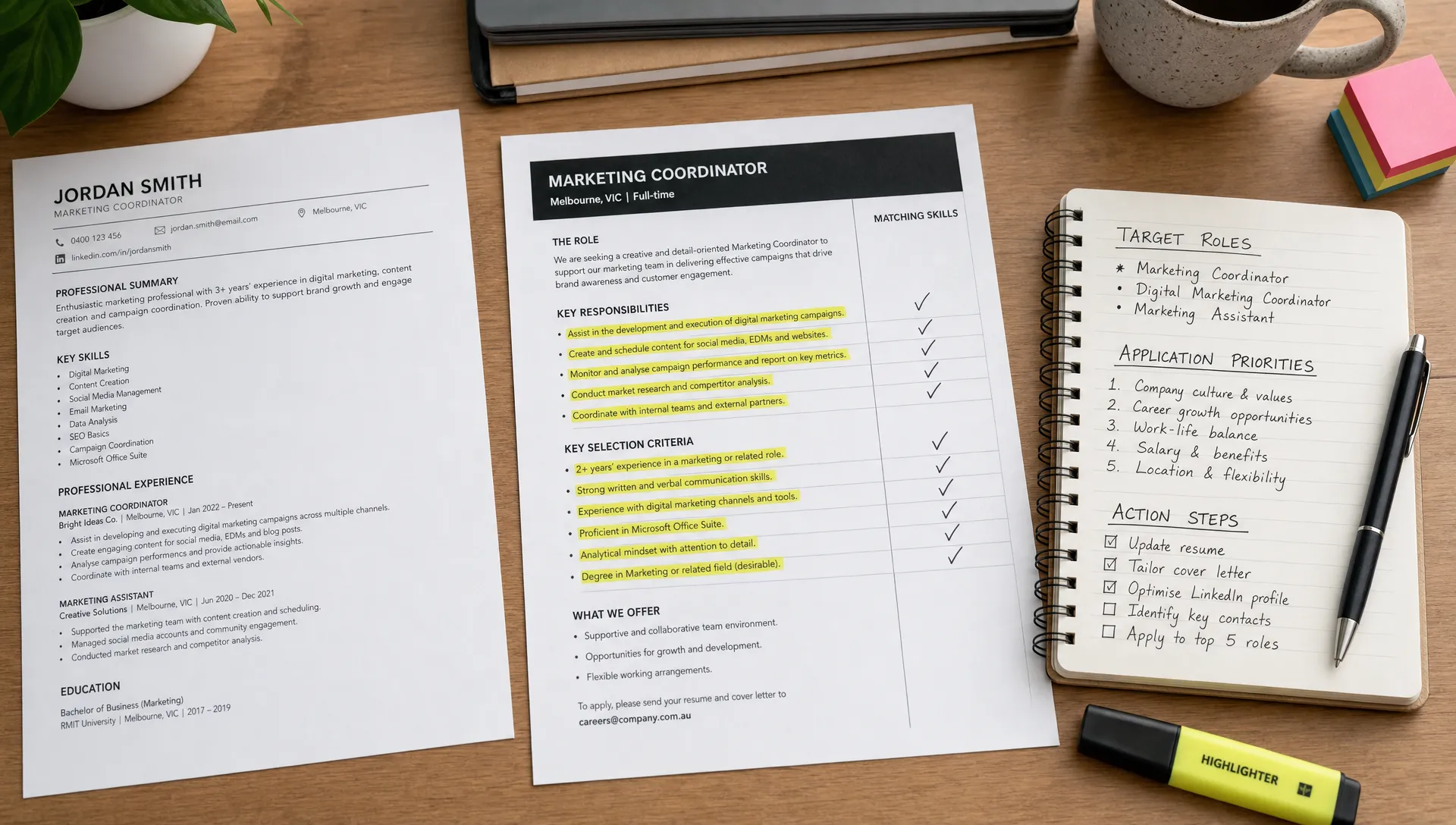
Read the job ad like a scorecard. The employer is telling you what they want to see, even if the wording is not perfect. Look for repeated skills, required tools, responsibilities, industry context and outcomes.
Then check whether your resume proves those things. If the ad asks for stakeholder communication, do not just say you are a strong communicator. Show when you coordinated with customers, managers, suppliers, students, patients, clients or cross-functional teams.
Use a role-specific resume version
You do not need to rewrite your entire resume for every Easy Apply role, but you should avoid one generic resume for every job. Build resume versions around role families.
For example:
- One resume for customer service roles.
- One resume for administration and operations roles.
- One resume for junior marketing roles.
- One resume for data, reporting or analyst roles.
Each version should highlight the achievements, tools and keywords most relevant to that role type. This keeps Easy Apply fast without making it careless.
Align your LinkedIn profile before applying
Your LinkedIn profile should make your target direction obvious. Start with your headline, About section, recent experience and skills. If a recruiter opens your profile after receiving your Easy Apply submission, they should see the same professional story your resume tells.
This matters even more for students and career changers. You may not have the exact job title yet, but you can still show relevant projects, transferable skills, certifications, industry interest and evidence of learning.
Answer screening questions carefully
Screening questions can carry more weight than candidates expect. If the employer asks about work rights, availability, salary expectations or required tools, vague answers may remove you from consideration.
Be honest and concise. If you do not meet a non-negotiable requirement, Easy Apply is unlikely to fix that. If you meet the requirement through a different path, such as project experience instead of formal job experience, make sure your resume supports the answer.
Track outcomes, not just applications
A high application count is not the same as progress. Track the quality of roles, the type of resume used, whether your profile was viewed and whether you received a response.
After two to three weeks, patterns matter. If one resume version gets responses and another does not, adjust. If you get views but no interviews, your profile may be interesting but your evidence may be weak. If you get no views or responses, your targeting or resume match may need work.
For a broader approach, Versadox has a guide on building a smarter application strategy instead of relying on volume alone.
A practical weekly workflow
LinkedIn Easy Apply is most useful when it sits inside a weekly system. This keeps you from bouncing between random job ads and helps you improve based on evidence.
A simple weekly rhythm could look like this:
- Shortlist 10 to 15 roles that genuinely match your target.
- Separate them into Easy Apply roles and employer website applications.
- Tailor or select the best resume version for each role family.
- Apply quickly only when the match is clear.
- Spend extra time on roles where a cover letter, portfolio or direct application can strengthen your case.
- Review responses weekly and adjust your resume, profile or targeting.
This workflow protects your energy. You are still moving quickly, but you are not treating every job ad as equal.
What a good Easy Apply resume needs in 2026
In 2026, a good application has to work for software and people. Many employers use applicant tracking systems to manage candidates, but the final decision still depends on whether a recruiter or hiring manager can understand your value.
For LinkedIn Easy Apply, your resume should be clean, focused and easy to scan. It should include relevant keywords from the job ad, but not in a forced way. It should also show outcomes, not just duties.
Strong evidence might include:
- Increased customer satisfaction through faster response handling.
- Reduced admin time by improving a spreadsheet, process or template.
- Supported a team project with clear deadlines and stakeholder updates.
- Built a class project, portfolio piece or volunteer initiative related to the target role.
- Managed competing priorities in a casual, part-time or internship role.
This is where many applicants undersell themselves. They assume only formal experience counts. In reality, early career applications often need to translate everyday experience into employer-relevant evidence.
If you want a wider view of what employers expect, the Versadox guide to a professional job application in 2026 explains how resumes, cover letters, digital presence and proof of skills work together.
Frequently Asked Questions
Is LinkedIn Easy Apply worth using? Yes, when the role is a strong match and your resume and LinkedIn profile are aligned. It is less useful when your application needs extra context, a tailored cover letter or detailed evidence.
Does LinkedIn Easy Apply reduce my chances? Not automatically. It can reduce your chances if you use a generic resume, apply to poorly matched roles or rely on volume instead of relevance.
Should I attach a resume to LinkedIn Easy Apply? In most cases, yes. A strong resume gives the recruiter a clearer view of your evidence than your LinkedIn profile alone.
Can I use the same resume for every Easy Apply job? You can, but it is rarely the best approach. A better option is to create resume versions for different role families, then use the most relevant one for each application.
Is Easy Apply good for graduates? It can be, especially for entry-level roles where the requirements are clear. Graduates should still tailor their resume around projects, placements, casual work, volunteering and transferable skills.
When should I apply on the company website instead? Apply through the company website when the role is highly competitive, requires documents beyond a resume or needs a stronger explanation of your background and motivation.
Apply faster, but not blindly
LinkedIn Easy Apply is useful when it helps you move quickly on roles you are genuinely ready for. It becomes a problem when it replaces strategy, tailoring and honest self-assessment.
Before you apply, ask whether the employer can see the match within a few seconds. If not, fix the resume, update the profile or choose an application route that gives you more room to explain.
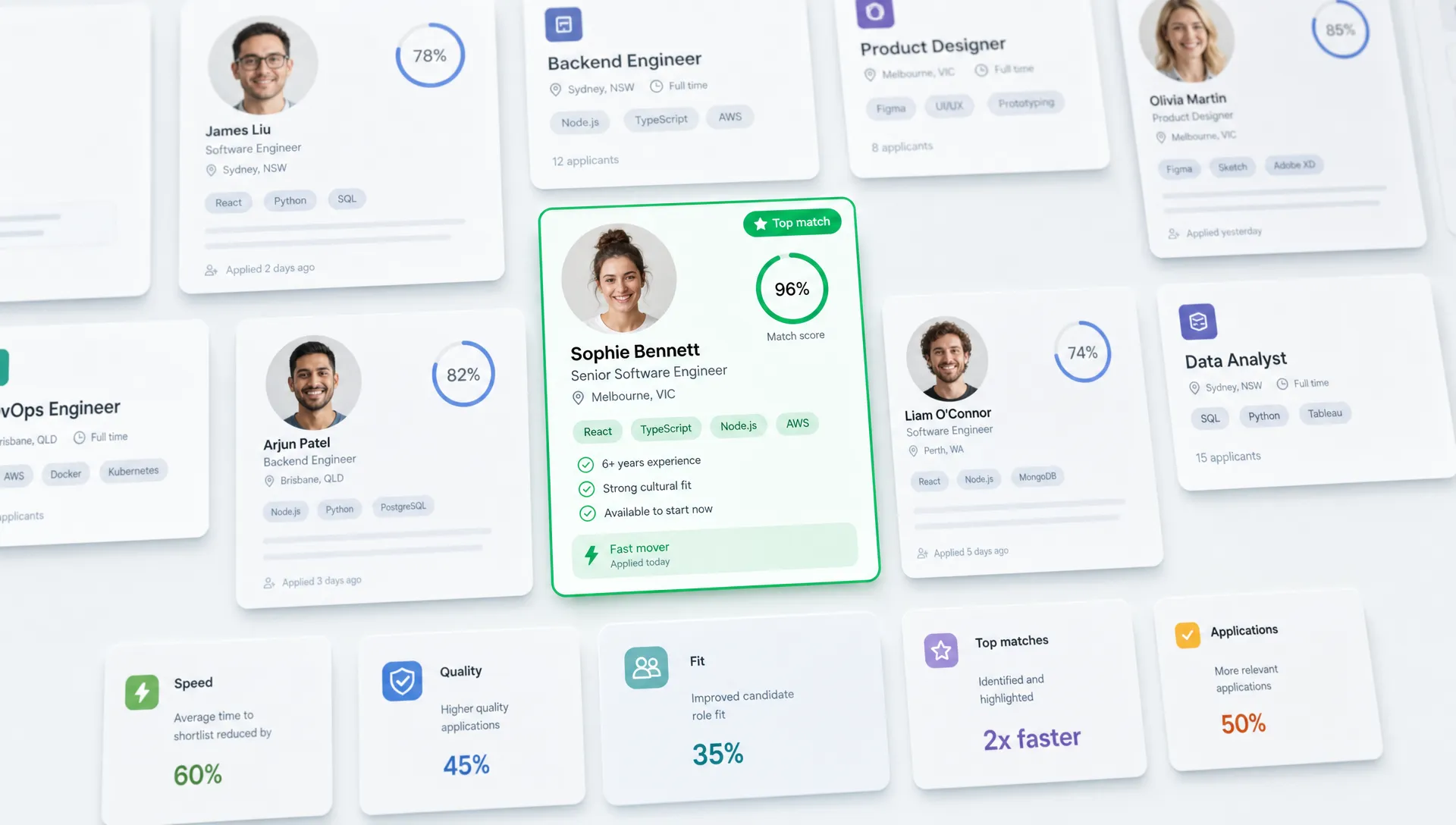
With Versadox, you can compare your resume against real roles, identify gaps and improve your application before you submit. That way, Easy Apply becomes a tool for confident action rather than another guess in the job hunt.





.svg)