


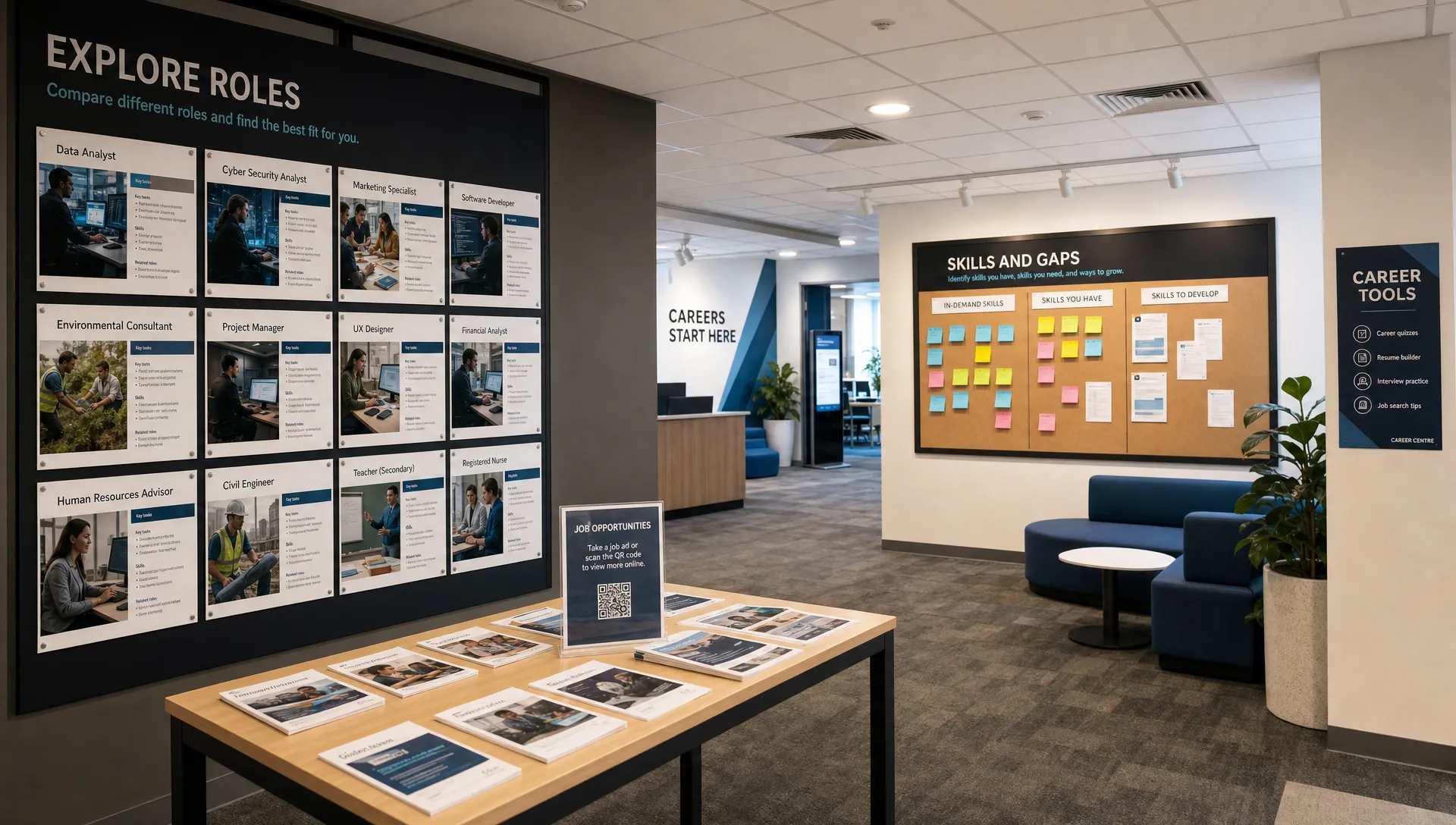
A job profile sounds like a simple document, but it can do more than explain a role. Used well, it becomes a practical guide for deciding whether a job is worth applying for, what evidence your resume should show and which gaps you need to close before you submit an application.
For students, graduates and career changers, this matters because job titles can be vague. “Coordinator”, “assistant”, “analyst” and “associate” can mean very different things depending on the employer, industry and level of responsibility. A job profile helps you look past the title and understand what the role actually expects.
A job profile is a clear summary of a role. It describes the purpose of the job, the work involved, the skills required, the experience usually expected and the type of person likely to succeed in that position.
In simple terms, it answers five questions:
A useful job profile is not just a copy of a job ad. Job ads are written by employers for a specific vacancy. A job profile can be broader. It helps you understand a role type across several employers so you can prepare stronger applications and make better career decisions.
These terms are often used together, but they are not the same.
A job profile describes the role itself. It focuses on what the position requires and what success looks like.
A job description is usually the employer’s official document or job ad for a specific vacancy. It may include duties, reporting lines, salary range, location, benefits and application instructions.
A resume profile is the short summary at the top of your resume. It describes you, not the job. It should show why your background matches the role you are targeting. If you are working on that section, Versadox has a practical guide on writing a strong job summary for your resume.
A job title is only the label. It can be useful, but it is often too broad to guide your application on its own.
When people say “job profile”, they may also mean the profile you create on a job board or recruitment platform. That is your candidate profile. In this article, the focus is the role profile you use to understand a job before applying.
A job profile gives your job search structure. Instead of applying to anything that sounds close, you can compare roles against a clearer picture of what you are aiming for.
This is especially useful if you are early in your career. You may not have a long work history yet, but you can still show alignment through projects, placements, volunteering, casual work, internships, coursework and transferable skills. The job profile tells you which parts of your background deserve the most attention.
For career changers, it helps translate previous experience into language the new industry understands. A retail supervisor moving into customer success, for example, may not have held that job title before. But the profile might reveal overlap in customer onboarding, complaint resolution, communication, CRM use and performance reporting.
A job profile also helps you avoid wasting time. If a role requires specific licensing, advanced software knowledge or years of specialised experience you do not have yet, you can make a better decision. That does not always mean giving up. It may mean applying for a related entry point first, building one missing skill or adjusting your target role.
A strong job profile gives enough detail to guide action. It should not be so generic that it could apply to almost any role.
Look for these elements when reading or creating one:
The goal is not to tick every box perfectly. The goal is to understand the role well enough to make a focused application.
You do not need a formal HR document to create a useful job profile. You can build one from real job ads, employer websites, career pages and industry research.
Choose a role family rather than one exact title. For example, instead of only looking at “marketing coordinator”, include “marketing assistant”, “digital marketing assistant” and “communications coordinator” if the duties overlap.
This helps you see patterns. If you are applying too broadly, your resume can become vague. If you narrow too much too early, you may miss suitable roles. Versadox covers this balance in its guide to job hunting strategies for better application results.
Find several current job ads in Australia for the type of role you want. Read them side by side and ignore the branding at first. Your aim is to identify what keeps repeating.
Look for repeated phrases around responsibilities, systems, outcomes and required skills. If three out of five ads mention Excel, stakeholder communication and weekly reporting, those are likely core requirements. If one ad mentions a niche tool once, it may be useful but not central.
Not every requirement has the same weight. Some are essential because the employer cannot train them quickly or legally hire without them. Others are preferences.
A must have might be a driver licence, a nursing registration, full working rights or advanced knowledge of a specific platform. A nice to have might be previous industry experience, familiarity with a related tool or exposure to a certain work environment.
This distinction matters because many candidates self reject too early. If you meet the core requirements and can show strong evidence, you may still be a realistic applicant even if you do not meet every preference.
A role can change meaning across industries. Administration in a university is different from administration in a clinic, construction firm or tech startup. Customer service in retail is different from customer support in software.
Employer websites can show the language, priorities and client outcomes that matter in a sector. For example, if you were exploring roles in health and wellness administration, reading a provider site that explains personalised nutrition support can help you understand how client trust, wellbeing goals and specialist services shape the work environment.
Once you know what the role requires, ask yourself what proof you have. This is where many applications become stronger.
Do not stop at “good communication skills”. Think of times you handled customers, explained information, resolved issues, wrote reports, presented findings or coordinated between people. Do not stop at “organised”. Think of schedules managed, deadlines met, events supported, stock controlled or competing priorities handled.
The best job profile becomes a bridge between what the employer wants and what your experience can prove.
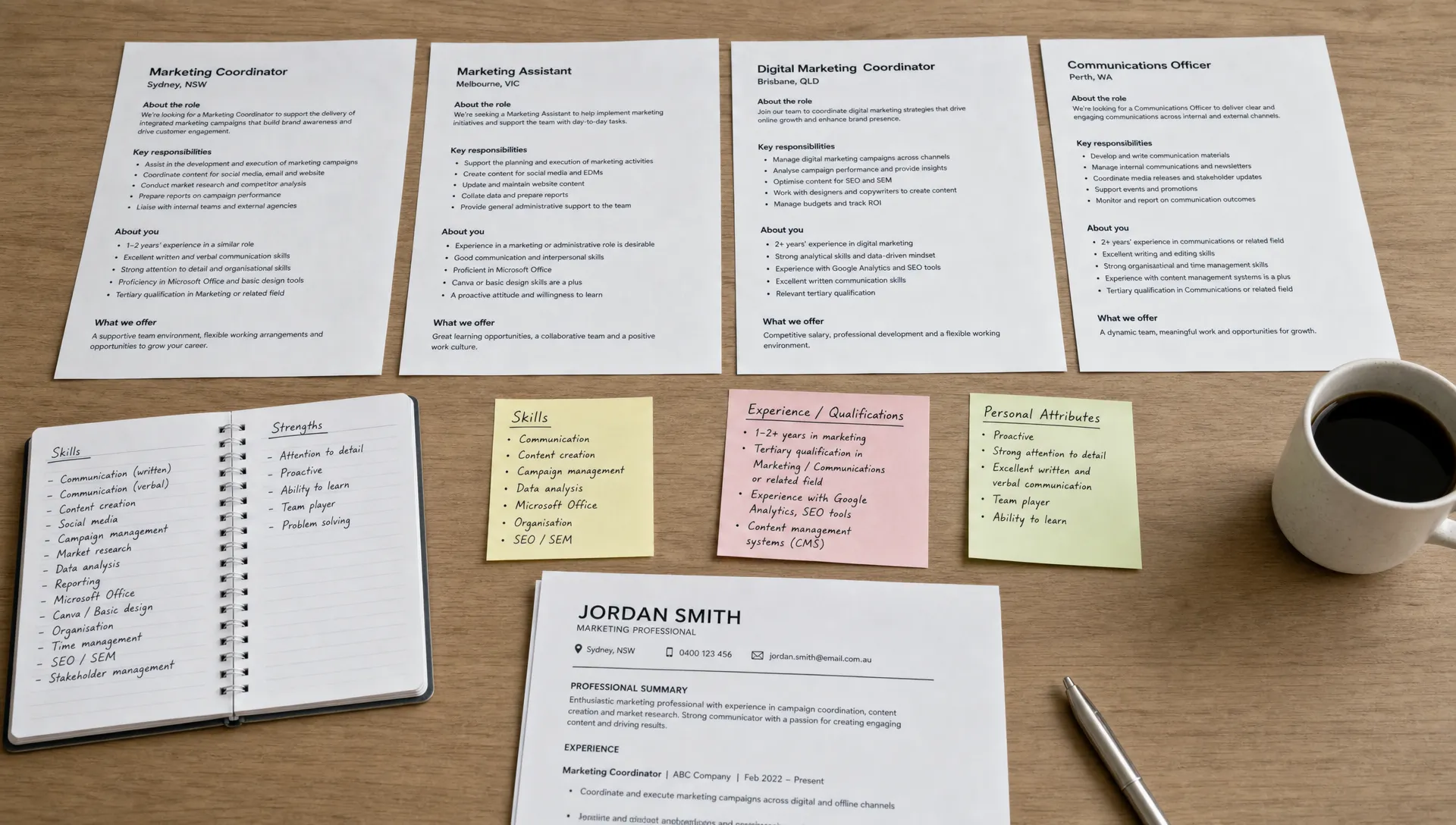
A job profile should shape your resume before you apply. It helps you decide what to include, what to reduce and what language to use.
Start with your resume summary. If the job profile shows the role needs client communication, reporting and strong organisation, your summary should reflect those strengths if you can prove them. Avoid a generic summary that says you are “motivated and hardworking” without showing relevance.
Next, review your skills section. The strongest skills are not always the ones you personally like most. They are the ones that match the role and can be backed up elsewhere in your resume.
Then adjust your work experience descriptions. A cafe job, retail job, university project or volunteer role can become highly relevant if you describe the right parts. For example, “served customers” is less useful than “handled high volume customer enquiries, processed transactions accurately and resolved order issues during peak periods.”
This does not mean copying the job ad line by line. It means aligning your evidence with the job profile. If you want a deeper process, read Versadox’s guide on how to match your resume to the job you want.
A cover letter should not repeat your whole resume. It should explain why your background makes sense for this particular role.
A job profile helps you choose the right focus. Before writing, identify the two or three requirements that seem most important. Then build your letter around matching examples.
For example, if the profile for a junior project coordinator role highlights scheduling, stakeholder communication and documentation, your letter could briefly show how you managed timelines in a university group project, communicated with different stakeholders in a part time job and maintained accurate records in an admin or volunteer setting.
The cover letter becomes much easier when the job profile is clear. You are no longer trying to sound impressive in general. You are showing fit for a specific type of work.
Interviews often test the same themes you found in the job profile. The employer wants to know whether you understand the work, whether you can do it and whether your examples are credible.
Use the profile to prepare stories for the most likely competency areas. If the role needs problem solving, prepare a real example of diagnosing an issue and taking action. If it needs teamwork, prepare an example where you worked with different people under pressure. If it needs attention to detail, prepare an example where accuracy mattered.
A practical approach is to create a short evidence bank before the interview. List five to seven examples from work, study, volunteering or personal projects. For each one, write down the situation, your action and the result. Then match each example to the requirements in the job profile.
This makes your answers more flexible. Instead of memorising scripts, you understand which examples prove which strengths.
Here is what a simple target job profile could look like for a graduate applying for entry level business analyst or operations analyst roles.
This profile gives the applicant a clearer plan. They can adjust their resume, choose better examples, identify missing skills and decide whether each advertised role is realistic.
A job profile is useful only if you apply it thoughtfully. Avoid these common mistakes.
The last point is especially important for early career applicants. Employers know you may not have years of experience. They still want signs that you can learn, communicate clearly and take responsibility. If you are unsure how to present your background honestly, Versadox has guidance on showing skills and experience without overselling.
A gap is not a failure. It is simply the distance between where you are now and what the role expects.
Some gaps can be closed quickly. You might complete a short course, practise a software tool, rewrite your resume examples or prepare stronger interview stories. Other gaps take longer, such as gaining industry experience, building a portfolio or completing a qualification.
A job profile helps you prioritise. If one missing skill appears in almost every ad, it deserves attention. If it appears rarely, it may not be urgent.
For students and graduates, gaps often sit in evidence rather than ability. You may have relevant skills but have not described them in employer language. For career changers, gaps often sit in translation. You may have done similar work in another setting but need to explain it in terms the new industry recognises.
A job profile is most powerful when you compare it directly against your application. That is where many job seekers struggle. It is easy to read a job ad and think, “I could do this”, but harder to know whether your resume and cover letter prove it clearly.
Versadox is designed to help job seekers make that comparison before applying. You can audit and score your existing resume, compare your application against real roles, identify gaps and receive AI powered improvements. The platform also provides role alignment insights and market readiness scoring so you can apply with more clarity.
For students, graduates and career changers, this can reduce guesswork. Instead of sending more generic applications, you can focus on stronger applications that show fit more clearly.
What is a job profile in simple terms? A job profile is a summary of what a role involves, what skills it needs and what type of evidence shows someone is ready for it. It helps you understand the job beyond the title.
Is a job profile the same as a job description? No. A job description usually refers to a specific employer’s advertised role or internal HR document. A job profile can be broader and can help you understand a role type across multiple employers.
How do I write a job profile for myself? Start by collecting several job ads for your target role. Identify repeated responsibilities, skills and requirements. Then write a short summary of the role purpose, key tasks, required skills, evidence needed and gaps you may need to close.
Can I apply if I do not match the full job profile? Yes, if you meet the core requirements and can show strong evidence of related skills. Many job ads include preferences as well as essentials. The key is knowing which requirements matter most.
How does a job profile improve my resume? It helps you choose the most relevant achievements, skills and wording. Instead of describing everything you have done, you can highlight the experience that best matches the role.
A job profile gives you a clearer way to judge roles, tailor your resume and prepare stronger examples. Before your next application, take time to understand the role behind the title and compare it against your evidence.
If you want a more structured way to do that, Versadox can help you assess role alignment, identify gaps and improve your resume before you submit.
This is a div block with a Webflow interaction that will be triggered when the heading is in the view.
Drop your resume in and get a real score in under a minute — plus the single biggest thing holding it back. No account needed.
Get my free score


